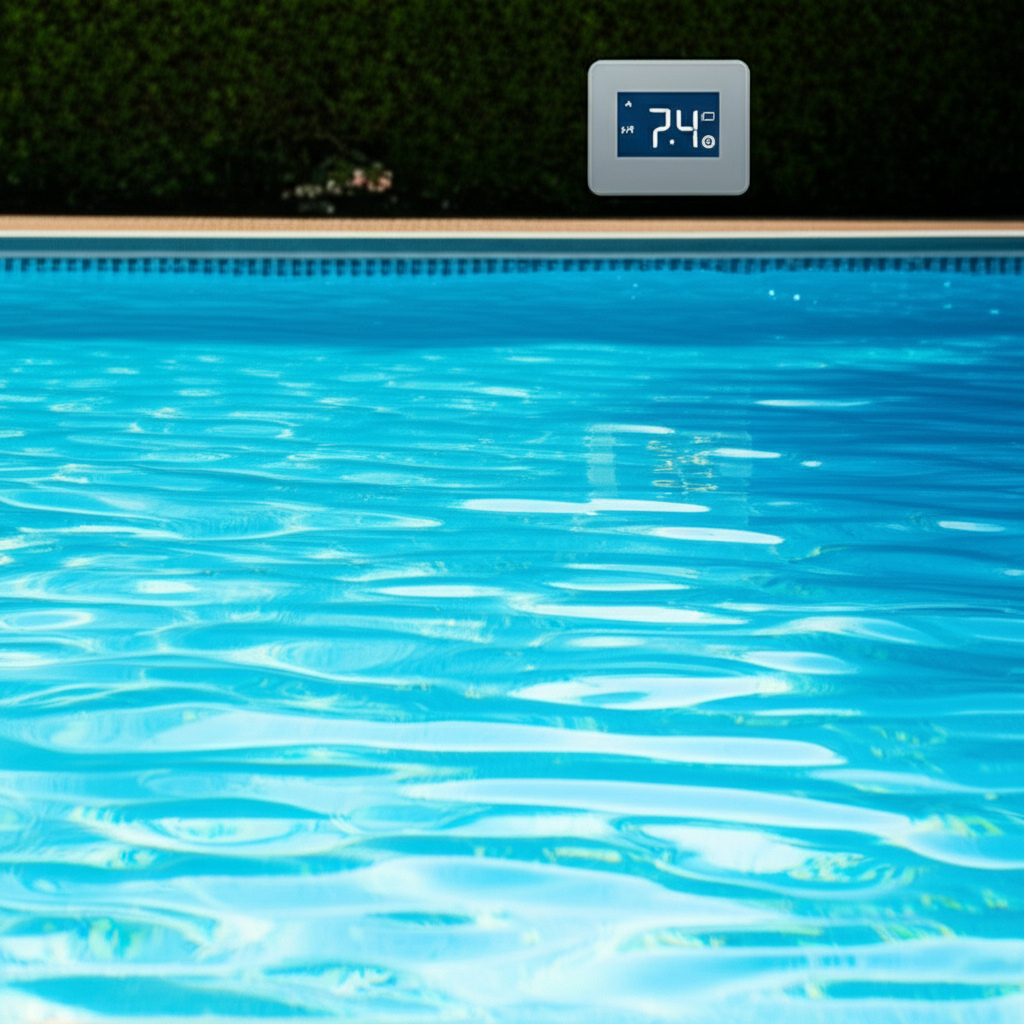
Pool pH: The Foundation of a Pristine Swimming Experience
Pool pH is arguably the most critical factor in maintaining healthy, comfortable, and efficient swimming pool water. Often overlooked or misunderstood, achieving and sustaining the correct pH balance is not just about clear water; it’s fundamental to swimmer comfort, the longevity of your pool equipment, and the efficacy of your sanitizers. Imagine diving into crystal-clear water that stings your eyes and irritates your skin – that’s often a tell-tale sign of an imbalanced pH, even if everything else looks perfect.
Why Optimal Pool pH Levels Are Non-Negotiable
Understanding why pH matters is the first step toward effortless control. pH measures the acidity or alkalinity of your pool water on a scale from 0 to 14. A pH of 7 is neutral. Values below 7 are acidic, while values above 7 are alkaline or basic. For swimming pools, the ideal range for pH levels is generally considered to be between 7.4 and 7.6, though some experts may suggest a slightly broader range of 7.2 to 7.8. Deviating from this narrow band can lead to a host of problems:
Swimmer Discomfort: If your pH is too low (acidic), swimmers may experience burning eyes, skin irritation, and potentially damaged hair. If it’s too high (alkaline), the water can feel slimy, and eyes may still become irritated, though typically less severely than with low pH.
Sanitizer Effectiveness: Chlorine, the most common pool sanitizer, works most efficiently when the pool pH is in the ideal range. If the pH is too low, chlorine dissipates quickly and aggressively, becoming less stable. If it’s too high, chlorine’s sanitizing power is significantly reduced, requiring you to use more chemicals to achieve the same sanitization level. This is often described as “locked out” chlorine.
Equipment Damage: Highly acidic water can corrode metal components like ladders, pump impellers, and heater elements, leading to costly repairs and premature replacement. Highly alkaline water, on the other hand, can cause scaling, where mineral deposits build up on heater elements, pool surfaces, and plumbing, reducing efficiency and eventually causing blockages.
Water Clarity: Imbalanced pH can lead to cloudy water. High pH causes calcium to precipitate out of solution, leading to cloudiness and scaling. Low pH can lead to foam or cause algae to thrive due to reduced sanitizer effectiveness.
Monitoring Your Pool pH: The First Step to Balance
Regular testing is the cornerstone of maintaining ideal pH levels. Most pool owners test their water at least 2-3 times per week, or even daily during heavy use or after significant weather events like rain. There are several reliable methods for testing:
Test Strips: These are quick and easy to use. Dip a strip into the water, wait a few seconds, and compare the color changes to a chart on the bottle. They provide a general indication.
Liquid Test Kits (DPD Kits): These kits involve adding drops of reagents to water samples in comparison tubes. They often provide more accurate readings for pH and chlorine than test strips.
Digital Testers: These electronic devices offer the highest level of accuracy and convenience, often displaying pH readings digitally after dipping the probe into the water.
Regardless of the method, always follow the manufacturer’s instructions for accurate results.
Adjusting Low Pool pH with a pH Increaser
If your test reveals that your pool pH is too low (below 7.2), your water is acidic and needs to be raised. The primary chemical used for this is a pH Increaser, typically sodium carbonate, also known as soda ash.
Symptoms of Low pH: Beyond the test result, you might notice brittle hair bands, faded liner, stinging eyes, and rapid chlorine consumption.
How to Use pH Increaser: Always add chemicals slowly and in small doses. First, ensure your pump is running to circulate the water. Dissolve the recommended amount of pH increaser (according to product instructions and your pool volume) in a bucket of pool water. Never add dry chemicals directly to the skimmer; this can lead to concentrated chemical exposure and damage to equipment. Slowly pour the dissolved solution into the deep end of the pool to ensure even distribution. Wait several hours (at least 4-6, or refer to product instructions) for the chemical to circulate and take effect, then retest your pH. Repeat the process in small increments until the ideal range is achieved. Always wear appropriate safety gear, such as gloves and eye protection.
Addressing High Pool pH: The Acid Solution
When your pool pH climbs too high (above 7.8), your water becomes too alkaline. This leads to reduced chlorine efficiency, potential scaling, and cloudy water. To lower high pH, you’ll use a pH decreaser, which is typically either muriatic acid (hydrochloric acid) or sodium bisulfate (dry acid).
Symptoms of High pH: Cloudy water, visible scale formation on surfaces or equipment, and decreased chlorine effectiveness.
* How to Use pH Decreaser: Similar to increasing pH, add decreasers carefully. Muriatic acid is corrosive and requires extreme caution; always wear robust gloves, eye protection, and old clothes. Dilute the recommended amount of acid in a large bucket of pool water before slowly pouring it into the deep end of the pool. Never add water to acid; always add acid to water. Sodium bisulfate is a safer, granular alternative that works similarly. Again, allow adequate circulation time (4-6 hours) before retesting. It’s better to add too little and reapply than to add too much and overshoot your target.
The Role of Total Alkalinity in Pool pH Stability
While focusing on pool pH directly, it’s important to briefly mention Total Alkalinity (TA). TA acts as a buffer, preventing sudden and drastic shifts in pH. Think of it as pH’s bodyguard. If your TA is too low, your pH will be difficult to stabilize and will fluctuate wildly. If it’s too high, it can make it challenging to adjust pH. The ideal TA range is usually between 80-120 ppm. Addressing TA usually precedes or accompanies pH adjustments for long-term stability.
Cultivating Flawless Balance for Effortless Control
Mastering your pool’s pH takes a little practice and consistent attention, but the rewards are immense. By regularly testing your pH levels and making informed adjustments with pH increaser or decreaser, you ensure a swimming environment that is not only safe and comfortable for everyone but also protects your significant investment in pool equipment. A balanced pool pH means fewer chemical headaches, more sparkling clear water, and the pure joy of a perfectly maintained swimming pool, year after year. It transforms pool ownership from a chore into a truly effortless and rewarding experience.