- Why Opt for Manual Pool Cleaning?
- Essential Tools for Effective Pool Vacuuming
- Setting Up for Manual Pool Vacuuming Success
- The Art of Pool Vacuuming: Techniques for a Pristine Finish
- Post-Vacuuming Care
- Troubleshooting Common Poor Vacuuming Issues
Pool Vacuuming is an essential maintenance task that keeps your backyard oasis sparkling clean and inviting. While modern automatic cleaners offer convenience, mastering manual pool cleaning remains an invaluable skill for every pool owner. It provides unparalleled control, allows for meticulous attention to detail, and ensures every nook and cranny is free from debris, algae, and fine particles. This guide will walk you through the quick and easy steps to manually vacuum your pool, transforming a seemingly daunting chore into a straightforward routine.
Why Opt for Manual Pool Cleaning?
Even with the advancements in robotic and automatic pool cleaners, manual vacuuming holds a distinct advantage. Manual pool cleaning offers:
Superior Thoroughness: You have direct control over where the vacuum head goes, ensuring stubborn spots, tight corners, and steps are meticulously cleaned – areas automated cleaners might miss.
Cost-Effectiveness: It doesn’t require an expensive piece of machinery, just a few essential tools, making it a budget-friendly option for maintaining cleanliness.
Effective for Heavy Debris: When your pool is overwhelmed by leaves after a storm or suffering from an algae bloom, manual vacuuming allows you to remove large volumes of debris directly to waste, bypassing and protecting your delicate filter system.
Spot Cleaning: Need to quickly clean a specific stained area or patch of dirt? Manual vacuuming is the fastest and most precise method.
Essential Tools for Effective Pool Vacuuming
Before you begin, gather the right equipment. Having these tools ready will make the process smooth and efficient:
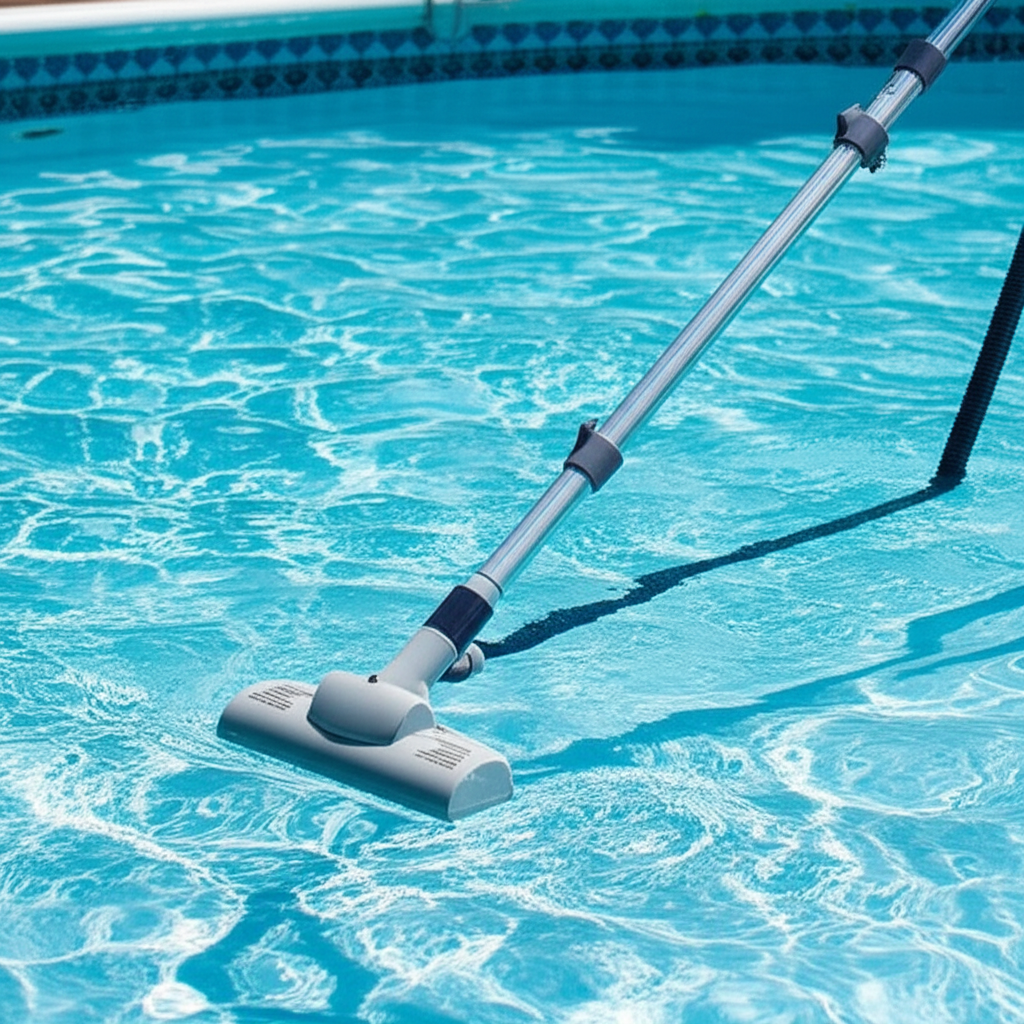
1. Telescopic Pole: Sturdy and extendable, this pole connects to your vacuum head and brush.
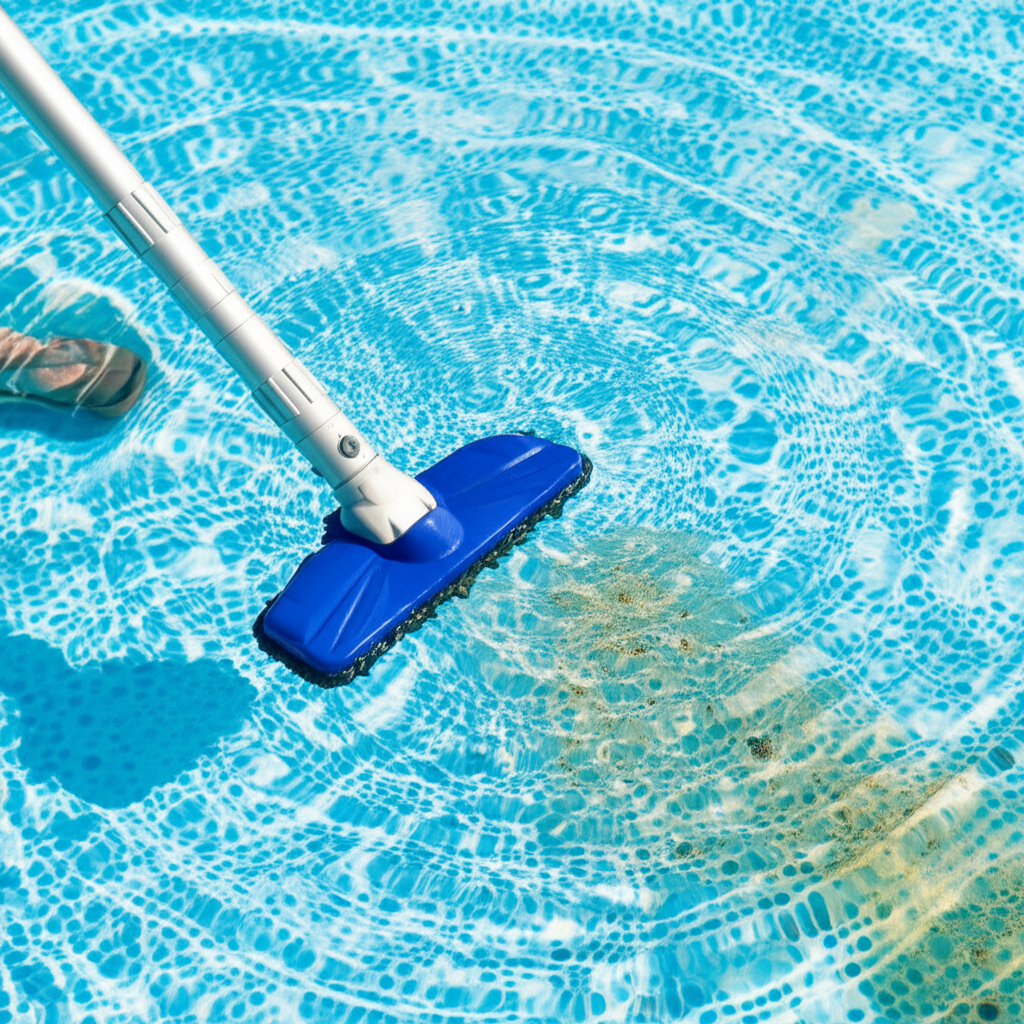
2. Pool Vacuum Head:
Wheeled Vacuum Head: Ideal for concrete, gunite, or fiberglass pools. Wheels allow for smooth gliding.
Brush Vacuum Head: Best for vinyl liner pools, as brushes protect the liner from potential punctures.
3. Vacuum Hose: A specialized floating hose, designed to sink when full of water. Ensure it’s long enough to reach all areas of your pool while connected to the skimmer or vacuum port.
4. Skimmer/Vacuum Plate (optional but recommended): This is a disc that fits over your skimmer basket and has a port for your vacuum hose. It creates a better seal and diverts suction more efficiently. Alternatively, you can connect directly to the skimmer suction hole.
5. Pool Brush & Skimmer Net: For pre-cleaning debris and brushing walls.
6. Pool Pump and Filter System: Absolutely crucial! Your pool’s filter system provides the suction power for the vacuum.
Setting Up for Manual Pool Vacuuming Success
Preparation is key to an easy vacuuming experience.
Step 1: Prep the Pool
Before you vacuum, use your skimming net to remove large floating debris like leaves, bugs, and twigs from the surface. Then, take your pool brush and give the walls and floor a quick brush. This dislodges stubborn dirt and algae, making it easier for the vacuum to pick up.
Step 2: Assemble Your Equipment
Attach the vacuum head to one end of your telescopic pole. Next, connect one end of your vacuum hose to the vacuum head.
Step 3: Prime the Vacuum Hose
This is a critical step to prevent air from entering your pump, which can cause it to lose prime or get damaged.
Method A (Submerge Slowly): With the vacuum head (and hose attached to it) submerged in the pool, slowly feed the rest of the hose into the water, allowing it to fill completely. You’ll see air bubbles escape from the vacuum head as the hose fills. Ensure no air remains within the hose.
Method B (Skimmer Connection First): If your pool has a dedicated vacuum port or a skimmer with a strong suction, attach the hose directly to the skimmer’s suction hole (or via the vacuum plate) before submerging the vacuum head. The pump’s suction will pull water through the hose, filling it up. Watch for air bubbles to stop appearing at the vacuum head end before proceeding.
Step 4: Connect to the Suction Port
Once the hose is fully primed, guide the open end (the one not connected to the vacuum head) to your pool’s skimmer or dedicated vacuum port. If using a vacuum plate, place it over your skimmer basket, then connect the hose to the plate’s port. Ensure a tight, secure fit to maximize suction.
Step 5: Adjust Filter Settings
For routine cleaning with minimal debris, set your filter valve to “FILTER.” If you’re dealing with a large amount of debris, heavy dirt, or an algae bloom, it’s often best to set your filter valve to “WASTE” (also known as “BACKWASH” on some systems, though “waste” typically bypasses the filter entirely). This sends the dirty water directly out of your pool, preventing it from clogging your filter, but be mindful that it also lowers your pool’s water level.
The Art of Pool Vacuuming: Techniques for a Pristine Finish
With everything set up, you’re ready to vacuum. Patience and technique will yield the best results:
1. Work Slowly and Methodically: Avoid fast, jerky movements. Push the vacuum head slowly across the bottom of the pool in overlapping strokes, much like mowing a lawn. This prevents stirring up debris, which would just resettle.
2. Overlap Your Passes: Ensure each pass overlaps the previous one by a few inches. This guarantees you don’t miss any spots and achieves a streak-free clean.
3. Start from the Shallow End: Begin vacuuming from the shallow end and work your way towards the deep end. This allows you to stand in the shallower water if needed and also pushes any stirred-up debris towards areas you haven’t cleaned yet.
4. Avoid Lifting the Vacuum Head: Try to keep the vacuum head fully submerged and in contact with the pool floor as much as possible. Lifting it out of the water will break the suction and could allow air into the hose, requiring you to re-prime. If you need to reposition significantly, turn off the pump briefly.
5. Watch for Stirred-Up Debris: If you notice clouds of dirt or debris rising, slow down your movements even further. If persistent, pause, allow the particles to settle, and then continue.
6. Spot Cleaning: For particularly dirty spots or stains, hold the vacuum head over the area for a few extra seconds to ensure maximum suction.
Post-Vacuuming Care
Once your pool is sparkling clean, a few final steps complete the process:
1. Disconnect: Turn off your pool pump. Carefully disconnect the vacuum hose from the skimmer/vacuum port and then from the vacuum head.
2. Clean Equipment: Rinse the vacuum head and hose with fresh water to remove any chemical residue. Store them in a cool, dry place, away from direct sunlight.
3. Clean Your Filter: If you vacuumed to “FILTER,” it’s crucial to backwash or rinse your filter immediately. This removes the accumulated debris and restores your filter’s efficiency. Even if you vacuumed to “WASTE,” a routine backwash is often a good maintenance practice.
4. Check Water Level and Chemistry: If you vacuumed to “WASTE,” your pool’s water level might have dropped. Refill it as needed. Always test your water chemistry after significant cleaning, especially after adding fresh water, and adjust as necessary.
Troubleshooting Common Poor Vacuuming Issues
Loss of Suction: Check for air leaks in the hose or connections. Ensure the hose is fully primed. Check your skimmer basket for clogs, or your pump basket for debris.
Debris Returning to the Pool: This usually indicates your filter is dirty or overloaded. Backwash or clean your filter thoroughly. If vacuuming to “FILTER” and the problem persists, try vacuuming to “WASTE.”
* Not Picking Up Fine Particles: Your filter might not be fine enough, or your water chemistry (especially alkalinity and pH) might be off, preventing particles from settling or being easily filtered. Consider using a clarifier or flocculant after manually vacuuming.
Manual pool vacuuming might take a little practice, but once you get the hang of it, you’ll appreciate the control and the impeccably clean results. It’s a rewarding part of pool ownership that ensures your swim time is always in the clearest, most inviting water possible. Happy swimming!