- Why Consistent Pool Maintenance is Non-Negotiable
- The Foundation: Your Daily Pool Care Checklist
- Stepping Up: Essential Weekly Pool Tasks
- Beyond Weekly: Occasional Checks for Comprehensive Care
- The Reward of Diligence
Daily Pool Care is the cornerstone of maintaining a sparkling, hygienic, and inviting swimming environment. While the idea of a daily routine might seem daunting, establishing a consistent schedule is the secret to preventing problems before they start, ultimately saving you time, money, and hassle in the long run. Flawless water isn’t just about aesthetics; it’s about ensuring a safe and healthy space for everyone to enjoy.
Why Consistent Pool Maintenance is Non-Negotiable
A swimming pool is a complex ecosystem. Without regular attention, it can quickly become a breeding ground for algae, bacteria, and other contaminants. Neglecting your pool can lead to cloudy water, skin and eye irritations, damage to your pool’s surface and equipment, and an overall unpleasant swimming experience. A proactive daily and weekly regimen, however, keeps your water balanced, your equipment running efficiently, and your pool eternally ready for a refreshing dip.
The Foundation: Your Daily Pool Care Checklist
Think of these tasks as quick checks and tidies that take just a few minutes but make a monumental difference.
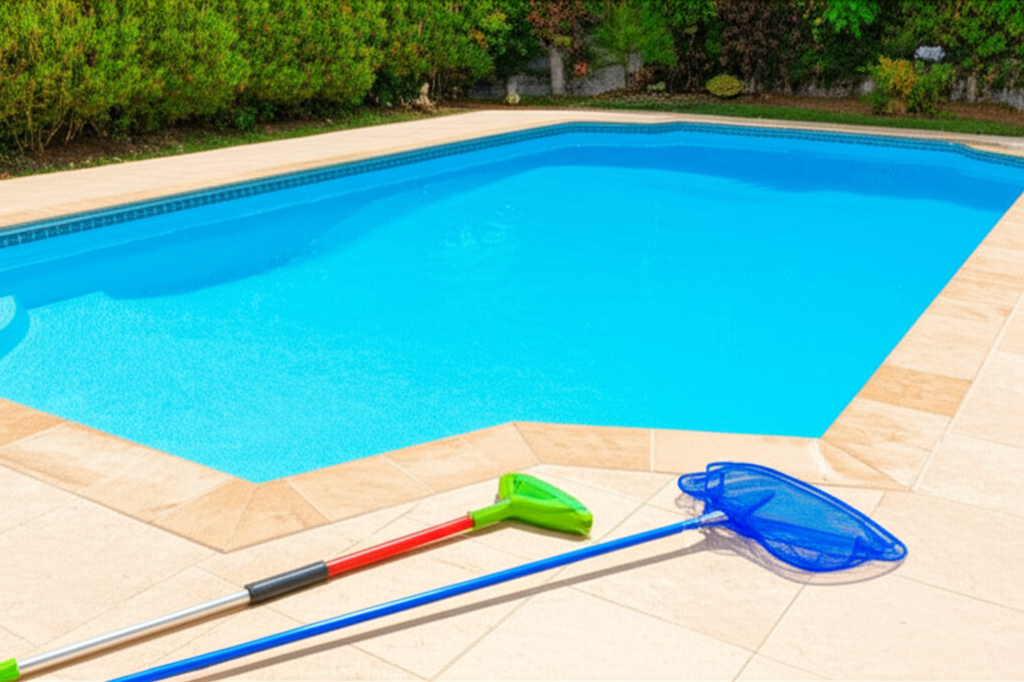
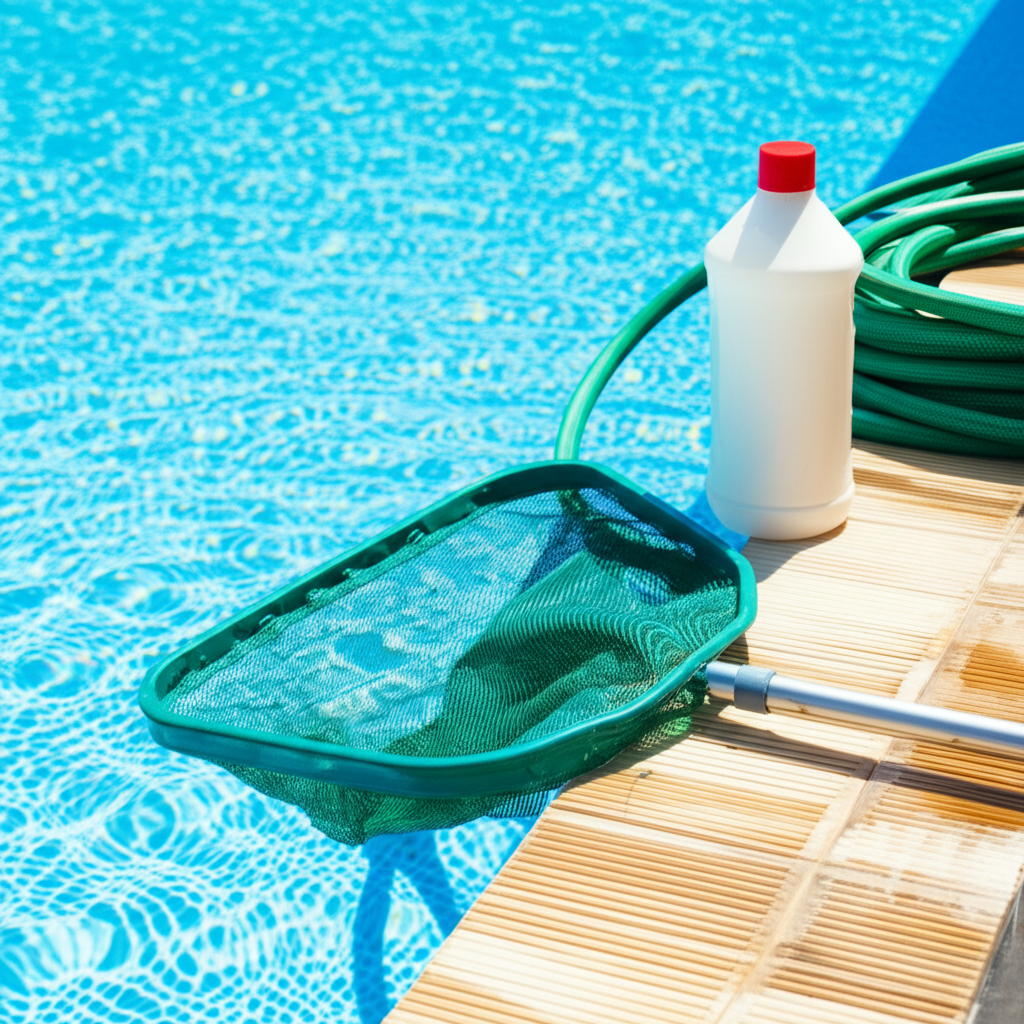
Skim the Surface: This is perhaps the most immediate impact you can make. Use a long-handled net to remove leaves, bugs, grass clippings, and any other floating debris from the water’s surface. Doing this once, or even twice, a day prevents organic matter from sinking, decaying, and ultimately consuming your sanitizer, leading to cloudy water and algae growth.
Empty Skimmer Baskets: The skimmers are your pool’s first line of defense against larger debris. Check and empty these baskets daily. A full skimmer basket restricts water flow, forcing your pump to work harder and reducing its efficiency. A clear basket ensures optimal filtration.
Check Water Level: Your pool’s water level is crucial for proper circulation and filtration. It should typically be about halfway up the skimmer opening. If it’s too low, your pump can suck in air, potentially damaging it. If it’s too high, your skimmers won’t function effectively. Most pools lose water due to evaporation and splash-out, so have a hose ready to top it off as needed.
Quick Visual Inspection: Take a minute to walk around the pool. Is the water clear and inviting? Are there any unusual colors or cloudiness? Are there any visible leaks around equipment or fixtures? Does the pump sound normal? Early detection of problems allows for quicker and often less expensive solutions.
Stepping Up: Essential Weekly Pool Tasks
While daily checks keep your pool pristine day-to-day, these weekly activities are critical for maintaining overall water chemistry and hygiene, ensuring the effectiveness of your Daily Pool Care efforts.
Test Your Water Chemistry: This is arguably the most vital weekly task. Using a reliable test kit or strips, measure your pool’s pH, alkalinity, and sanitizer (chlorine or alternative) levels.
pH (7.4-7.6 ideal): Crucial for swimmer comfort and sanitizer effectiveness.
Alkalinity (80-120 ppm ideal): Acts as a buffer for pH, preventing wild fluctuations.
Sanitizer (1-3 ppm for chlorine): Kills bacteria and algae.
Adjust Chemicals as Needed: Based on your test results, add the necessary chemicals in the correct dosages. Always follow product instructions carefully and add chemicals slowly to avoid shocking the pool. Allow time for chemicals to circulate before retesting.
Brush Walls and Floor: Even with a good automatic cleaner, manual brushing is essential for dislodging dirt, grime, and budding algae from the pool’s surfaces, especially in areas with poor circulation like steps, corners, and behind ladders. Use a stiff brush for plaster pools and a softer brush for vinyl liners or fiberglass.
Vacuum the Pool: Whether you use a manual vacuum, a robotic cleaner, or an automatic pool cleaner, vacuuming at least once a week removes settled debris from the bottom of your pool that skimming can’t reach.
Clean Pump Strainer Basket: Similar to skimmer baskets, the pump strainer basket traps larger debris before it reaches the pump impeller. Turn off the pump, remove the lid, clear the basket, and inspect for cracks or damage before replacing.
Backwash or Clean Filter:
Sand Filters: When the pressure gauge reads 8-10 psi above its clean starting pressure, it’s time to backwash. This reverses water flow to flush out trapped debris.
DE Filters: These also require backwashing and periodic recharging with new diatomaceous earth.
Cartridge Filters: These don’t backwash. Instead, cartridges need to be removed and hosed clean, typically every 4-6 weeks, or when pressure rises.
Inspect Equipment: Take a moment to check your pump, filter, heater, and other equipment for any signs of wear, leaks, or unusual noises. Addressing minor issues early can prevent major breakdowns.
Beyond Weekly: Occasional Checks for Comprehensive Care
While not strictly daily or weekly, remember to periodically check:
Calcium Hardness (monthly/bi-monthly): Important for preventing scaling or corrosion.
Cyanuric Acid (stabilizer – monthly/bi-monthly): Protects chlorine from UV degradation.
Shock the Pool (as needed): After heavy use, rain, or when algae appears, a shock treatment helps break down contaminants and restore chlorine levels.
The Reward of Diligence
Embracing this daily and weekly maintenance schedule might seem like a lot initially, but it quickly becomes second nature. By integrating these tasks into your routine, you’re not just maintaining a pool; you’re cultivating a consistently clean, safe, and beautiful oasis. The result of diligent Daily Pool Care and consistent weekly attention is crystal-clear, flawless water that’s always ready for your enjoyment, offering endless hours of relaxation and fun for you and your loved ones.