- The Allure of a Sloped Yard Pool
- The Crucial Role of Retaining Walls
- Engineering Stability: Understanding Retaining Walls
- Design Considerations for Your Sloped Yard Pool Project
- Expert Tips for a Successful Sloped Yard Pool Installation
Transforming Challenging Terrain: The Art of Building Pools on Slopes
A Sloped Yard Pool is not merely a luxury; it’s a testament to innovative design and engineering prowess. Many homeowners dream of a sparkling aquatic oasis, only to be deterred by a steeply graded backyard. However, rather than being an obstacle, a sloped yard can be an incredible canvas for creating a truly unique and breathtaking pool environment. The secret to unlocking this potential lies in the masterful integration of expertly designed and constructed retaining walls. These structural marvels don’t just hold back earth; they shape the landscape, create level platforms, and become integral design elements that elevate the entire outdoor living space.
The Allure of a Sloped Yard Pool
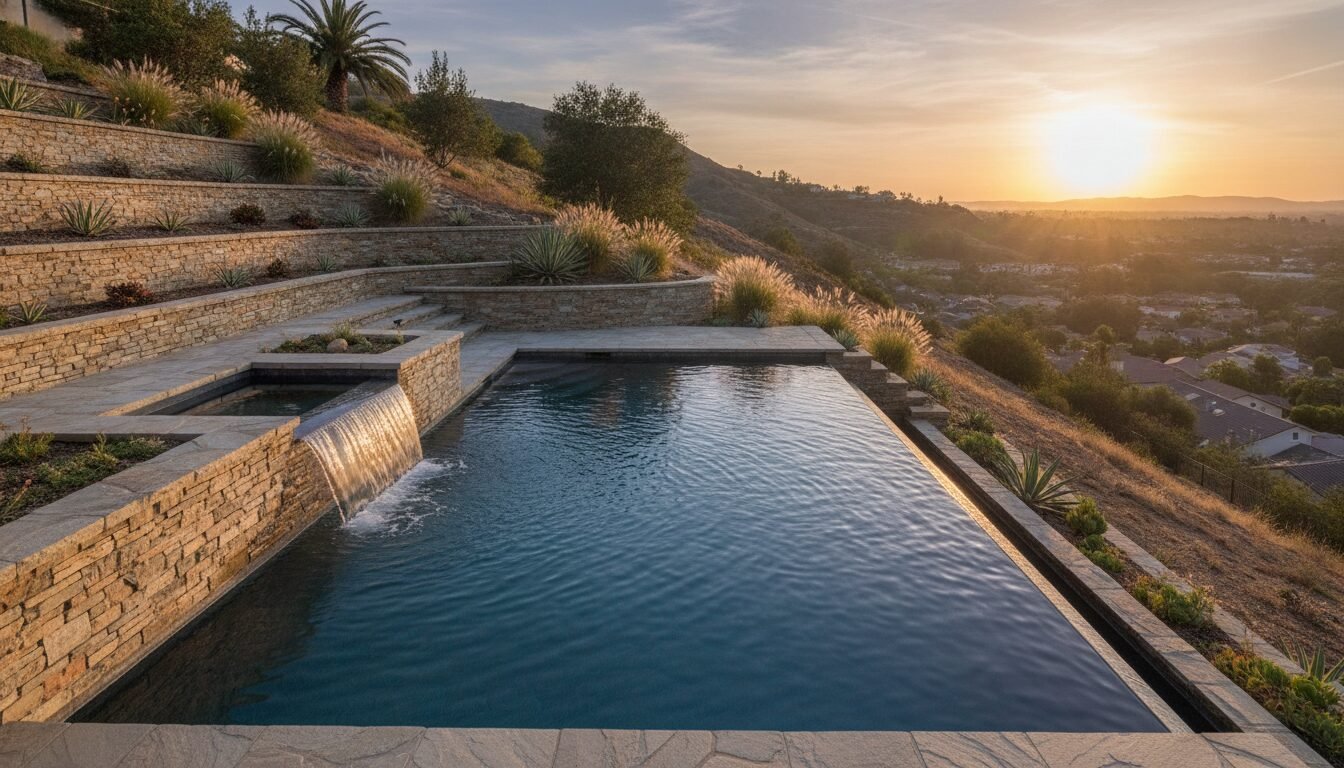
Opting for a pool in a sloped yard offers distinct advantages that flat lots simply cannot replicate. Elevated positions often provide unparalleled panoramic views, turning your swim into a serene escape. Such designs lend themselves naturally to multi-tiered patios, infinity edges that blend with the horizon, and dramatic landscaping features that cascade down the hillside. These pools frequently become the focal point of an entire outdoor living complex, incorporating unique decks, integrated seating, fire pits, and beautifully terraced gardens. It’s an opportunity to create a backyard that is far from ordinary, boasting intricate levels and compelling visual interest.
The Crucial Role of Retaining Walls
For any Sloped Yard Pool project, retaining walls are fundamental. They are the backbone of the entire structure, providing the necessary stability and creating the level ground required for safe pool installation. Without robust retaining walls, the earth would simply give way, making pool construction impossible and dangerous. These walls serve several critical functions:
1. Leveling and Foundation: They create a flat, stable platform for the pool shell and surrounding decking, transforming uneven terrain into usable space.
2. Erosion Control: By holding back soil, retaining walls prevent erosion and landslides, protecting your property and the integrity of the pool structure, especially during heavy rains.
3. Structural Support: They bear the load of the backfilled soil and often part of the pool structure itself, ensuring long-term stability.
4. Aesthetic Integration: Beyond their utilitarian purpose, retaining walls can be stunning design features, defining spaces, creating visual tiers, and providing opportunities for integrated lighting, planting beds, or even water features.
Engineering Stability: Understanding Retaining Walls
The construction of retaining walls for a Sloped Yard Pool is a complex engineering task that requires specialized knowledge. Various materials and construction methods can be employed, each with its own advantages:
Poured Concrete: Highly durable and versatile, concrete walls can be reinforced with steel to handle immense pressure. They offer a smooth finish or can be textured and colored to match surrounding aesthetics.
Segmental Retaining Block (SRW): These interlocking concrete blocks are popular for their ease of installation and aesthetic variety. They are typically dry-stacked and rely on aggregate backfill and geo-grid reinforcement for stability.
Natural Stone: For a rustic, timeless look, natural stone walls (either mortared or dry-stacked) are an excellent choice. While beautiful, they often require highly skilled masons.
Timber/Wood: While less common for major pool support due to durability concerns over time, treated timber can be used for smaller, decorative terracing or non-critical structures.
Regardless of the material, proper engineering design – including footings, drainage, soil compaction, and reinforcement – is paramount. A structural engineer must assess the soil conditions, slope angle, and anticipated loads to design a retaining wall that will stand the test of time and provide unwavering support for your pool.
Design Considerations for Your Sloped Yard Pool Project
Successfully integrating a pool into a sloped landscape involves careful planning beyond just the retaining walls:
Site Assessment and Geotechnical Survey: Before any digging begins, a thorough analysis of the soil composition, bedrock, and water table is essential. This survey informs the structural design of both the pool and its supporting walls.
Drainage Systems: Effective drainage is critical. Water accumulation behind retaining walls can lead to hydrostatic pressure, instability, and premature failure. Weep holes, gravel backfill, and subsurface drainage pipes are crucial components.
Aesthetics and Integration: Consider how the retaining walls will complement the pool and the overall landscape design. They can be clad in stone, stuccoed, or even incorporate built-in features like a waterfall or a raised spa.
Accessibility: Plan for safe and easy access to the pool level from other parts of the yard, often involving steps, ramps, or terraced pathways.
* Local Regulations and Permits: Building on a slope, especially with extensive excavation and retaining wall construction, almost always requires specific permits and adherence to local zoning and building codes. Engage professionals who are familiar with these requirements.
Expert Tips for a Successful Sloped Yard Pool Installation
Embarking on a Sloped Yard Pool project is a significant undertaking, one that demands a team of seasoned professionals. Here are some expert recommendations to ensure success:
1. Hire the Right Team: This isn’t a DIY project. You’ll need a landscape architect for design, a structural engineer for retaining wall specifications, and an experienced pool builder accustomed to complex sloped installations. Their collaboration is key.
2. Prioritize Foundation and Drainage: Never cut corners on the structural integrity of the retaining walls or the efficacy of the drainage system. These are non-negotiable elements for the long-term health and safety of your pool.
3. Embrace the Slope: View the slope not as a problem, but as an opportunity for unique design elements like infinity edges, multi-level decks, integrated planters, and dramatic water features that flow down the terrain.
4. Long-Term Maintenance: Understand that retaining walls and pools require ongoing maintenance. Regular inspections, especially for drainage, are important to catch any issues early.
In conclusion, the vision of a stunning pool nestled into a challenging hillside is not just a dream but an achievable reality for any homeowner willing to invest in expert craftsmanship. With meticulously engineered and beautifully integrated retaining walls, a sloped yard can be transformed into a breathtaking sanctuary, offering a unique blend of functionality, luxury, and unparalleled aesthetic appeal.