- Understanding the Role of Cyanuric Acid
- The Science Behind This Pool Stabilizer
- Why You Can't Do Without a Pool Stabilizer
- Finding the Right Balance: Recommended Cyanuric Acid Levels
- How to Add Cyanuric Acid to Your Pool
- Maintaining Optimal Levels of Cyanuric Acid
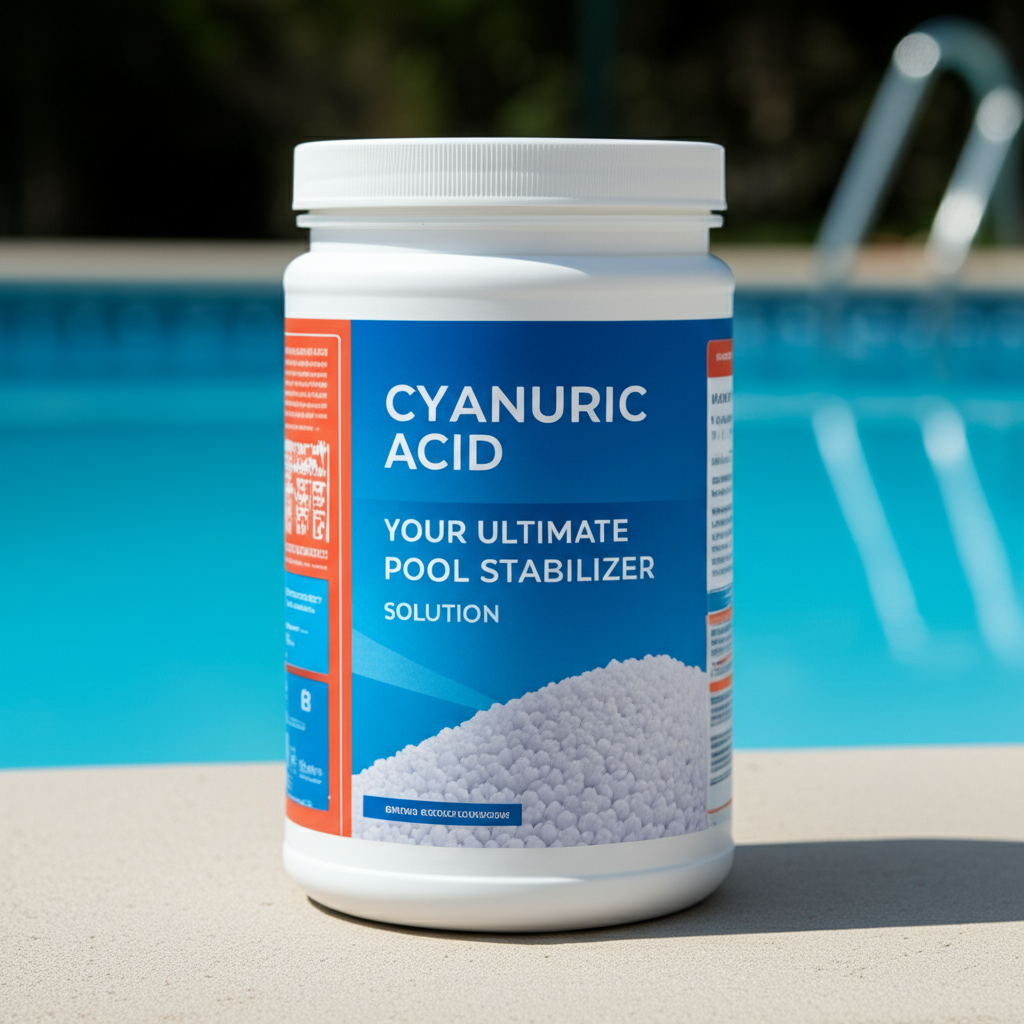
Cyanuric Acid is the unsung hero of countless swimming pools, a vital component often overlooked but indispensable for maintaining pristine water quality and efficient sanitation. As the ultimate pool stabilizer solution, it plays a critical role in preserving the effectiveness of chlorine, the primary disinfectant that keeps your pool safe and sparkling clean. Without it, your chlorine would rapidly diminish under the relentless assault of the sun’s UV rays, leading to constant chemical consumption, higher costs, and a perpetual battle against algae and bacteria.
Understanding the Role of Cyanuric Acid
At its core, cyanuric acid (CYA) is a chemical compound acting as a sunscreen for chlorine. It binds reversibly with free chlorine, protecting it from degradation by ultraviolet (UV) radiation from sunlight. When the sun shines directly on pool water, chlorine molecules are notoriously vulnerable. UV rays break them down at an astonishing rate, sometimes reducing chlorine levels by as much as 75-90% in just a few hours. This makes it incredibly difficult to maintain a consistent chlorine residual, which is crucial for effective sanitation.
By forming a temporary bond with chlorine, CYA essentially shields it from this rapid breakdown. The bonded chlorine is still available to sanitize the water when needed, but its lifespan in the pool is significantly extended. This translates directly into less chlorine consumption, fewer trips to the pool store, and more stable water chemistry.
The Science Behind This Pool Stabilizer
The mechanism is elegant in its simplicity. When free chlorine (hypochlorous acid, HOCl, or hypochlorite ion, OCl-) encounters cyanuric acid, it forms a protective, weaker bond. This “stabilized” chlorine compound is much more resistant to UV radiation. When a contaminant like bacteria or algae enters the pool, the chlorine detaches from the cyanuric acid to oxidize and sanitize the water. Once the task is complete, it can re-bond with CYA, ready to be protected again. This dynamic interaction ensures that your chlorine levels remain effective for longer periods, providing continuous disinfection without excessive reapplication.
Why You Can’t Do Without a Pool Stabilizer
Imagine running a marathon without proper hydration – it’s inefficient and unsustainable. Similarly, operating a pool without an adequate pool stabilizer is a constant uphill battle. Here’s why CYA is absolutely essential:
Chlorine Preservation: Studies show that CYA can reduce chlorine loss due to UV by a factor of 8 to 10. This means your chlorine lasts far longer, providing consistent sanitation.
Cost Savings: Less chlorine lost means less chlorine purchased. Over a swimming season, this can amount to significant financial savings.
Stable Water Chemistry: With stable chlorine levels, it’s easier to maintain other aspects of water chemistry, reducing the likelihood of algae blooms or bacterial infections.
Reduced Maintenance: Fewer instances of having to “shock” your pool or deal with green water translates to more time enjoying your pool and less time managing it.
Finding the Right Balance: Recommended Cyanuric Acid Levels
While invaluable, too much or too little cyanuric acid can cause problems. The recommended range for residential pools is generally 30-50 parts per million (ppm). Some experts extend this to 60-80 ppm, especially for saltwater pools.
Too Low (below 30 ppm): Your chlorine will degrade rapidly, leading to inconsistent sanitation and high chlorine consumption.
Too High (above 80-100 ppm): Paradoxically, excessively high CYA levels can over-stabilize chlorine. This means the chlorine becomes too tightly bound to the CYA, making it less effective at sanitizing the water. This phenomenon is often referred to as “chlorine lock” and can lead to cloudy water, algae growth, and a persistent demand for more chlorine, even when test kits show adequate levels.
Testing your CYA levels regularly (at least monthly, or bi-weekly if you add stabilized chlorine often) is crucial. Test kits or strips specifically designed for CYA are readily available.
How to Add Cyanuric Acid to Your Pool
Adding granular cyanuric acid is a straightforward process, but patience is key as it dissolves slowly.
1. Determine Your Needs: Test your current CYA level and calculate how much you need to add to reach the desired range (e.g., typically 30-50 ppm). A rule of thumb is that 10 ounces of CYA per 10,000 gallons of water will raise the level by approximately 7-8 ppm.
2. Dissolve Carefully: Never add granular CYA directly to the skimmer or pump basket, as it can get stuck and corrode plumbing components as it slowly dissolves there. Instead, place the granular CYA in a skimmer sock or pantyhose and suspend it in front of a return jet, allowing the circulating water to gently dissolve it over several hours or even a day.
3. Circulate and Test: Keep your pump running for at least 24 hours after adding CYA to ensure it’s fully dissolved and distributed throughout the pool. Wait 2-3 days before retesting to get an accurate reading.
Alternatively, many pool owners use stabilized chlorine products like dichlor (granular) or trichlor (tablets/sticks), which already contain cyanuric acid. While convenient, this is also how CYA levels can slowly creep up over time.
Maintaining Optimal Levels of Cyanuric Acid
Once you’ve established the correct CYA level, maintaining it requires vigilance, especially if you use stabilized chlorine products.
Regular Testing: Make CYA testing a routine part of your pool maintenance schedule.
Dilution for Reduction: If your CYA levels become too high, the only effective way to lower them is by partially draining and refilling your pool with fresh water. There are no chemicals that specifically reduce CYA.
* Consider Unstabilized Chlorine: If you find your CYA levels consistently rising, switch to an unstabilized chlorine product like liquid chlorine (sodium hypochlorite) or calcium hypochlorite, and manage your CYA levels independently.
Ultimately, Cyanuric Acid is an indispensable ally in pool maintenance. By understanding its function, maintaining optimal levels, and adding it correctly, you can ensure your chlorine works efficiently, your pool water remains sparkling clear, and you spend more time enjoying your backyard oasis rather than constantly battling imbalances.