Free Chlorine: The Unsung Hero of Your Backyard Oasis
Free Chlorine is without a doubt the most crucial element in maintaining a healthy, safe, and sparkling swimming pool. Often misunderstood or simply taken for granted, this active form of chlorine is your pool’s primary defense against a myriad of undesirable contaminants. It’s what keeps your water crystal clear, inviting, and free from harmful pathogens that can turn a refreshing dip into a health hazard. Understanding how Free Chlorine works, how to measure it, and how to maintain its optimal levels is the bedrock of effective pool care.
What is Free Chlorine and Why is it So Important?
At its core, Free Chlorine (FC) refers to the amount of chlorine present in your pool water that is available to sanitize and disinfect. This powerful pool sanitizer exists in two forms: hypochlorous acid (HClO) and hypochlorite ion (ClO⁻). Together, these are the active soldiers tirelessly battling bacteria, viruses, algae, and other organic matter introduced by swimmers, wind, rain, and debris. When these active forms of chlorine encounter contaminants, they oxidize and destroy them, rendering the water safe for swimming. Without adequate levels of FC, your pool swiftly becomes a breeding ground for microorganisms, leading to cloudy water, unsightly algae blooms, and potential health risks.
Decoding the Chlorine Landscape: Free, Combined, and Total
To truly appreciate the role of Free Chlorine, it’s essential to understand its relationship with other forms of chlorine found in your pool water:
Free Chlorine (FC): As discussed, this is the active sanitizer, ready to work. It’s the number you want to see consistently within the ideal range.
Combined Chlorine (CC) or Chloramines: When Free Chlorine has done its job and reacted with contaminants (like sweat, urine, body oils, and lotions), it forms less effective molecules known as chloramines. These chloramines are the culprits behind that strong “chlorine smell” often associated with pools, which many mistakenly believe signifies a clean pool. In reality, a strong chloramine smell indicates insufficient Free Chlorine and overworked sanitizer. They are also responsible for eye and skin irritation.
Total Chlorine (TC): This is simply the sum of Free Chlorine and Combined Chlorine (TC = FC + CC). When you test your pool water, you’ll typically get readings for both FC and TC. If your TC reading is significantly higher than your FC reading (i.e., you have a high CC level), it’s a clear sign that your pool needs attention, often a “shock treatment” to break down these ineffective chloramines and regenerate Free Chlorine.
Maintaining a healthy pool means keeping Combined Chlorine levels as close to zero as possible, ideally below 0.2 ppm. A recurring presence of CC signals that your Free Chlorine isn’t keeping up with the organic load, necessitating adjustments to your sanitization routine.
Maintaining Optimal Free Chlorine Levels for a Healthy Pool
For most residential swimming pools, the ideal range for Free Chlorine is typically between 1 and 3 parts per million (ppm). For spas or during periods of heavy use or hot weather, it might be advisable to aim for the higher end of this range (e.g., 2-4 ppm). Consistent monitoring is key:
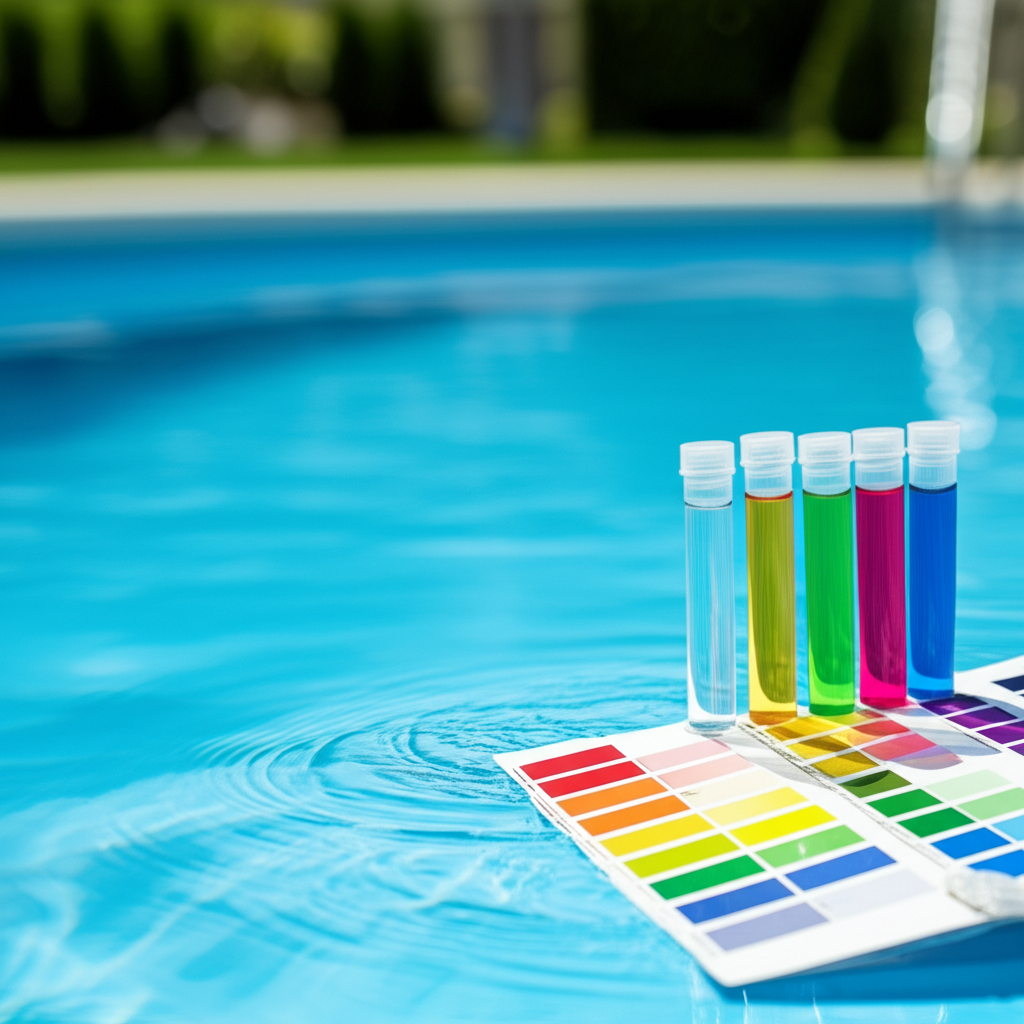
Regular Testing: Test your pool water at least 2-3 times per week, or daily if the pool is heavily used, during extreme weather, or after adding chemicals. Utilize reliable test strips or a liquid test kit for accuracy.
Factors Affecting FC: Sunlight rapidly depletes Free Chlorine, as do high swimmer loads, heavy rain, and the presence of organic debris (leaves, pollen, etc.). Cyanuric Acid (CYA), often called “stabilizer,” helps protect Free Chlorine from UV degradation, but too much CYA can also hinder FC’s effectiveness.
Adjusting Levels:
To increase FC: Add chlorine in the form of granular shock, liquid chlorine, or chlorine tablets. Always follow manufacturer instructions carefully.
To decrease FC: If levels are too high, cease adding chlorine, wait for sunlight to naturally dissipate it, or use a chlorine neutralizer as a last resort.
pH Balance is Crucial: The effectiveness of Free Chlorine is heavily dependent on your pool’s pH level. An ideal pH range of 7.4-7.6 ensures that the hypochlorous acid component of FC is most potent. If pH is too high, chlorine becomes less effective; if too low, it can become corrosive.
The Perils of Insufficient Free Chlorine
Ignoring your Free Chlorine levels can quickly lead to an unhealthy and unsightly pool environment:
Algae Blooms: Without enough FC, algae can proliferate rapidly, turning your pool green and slimy, making it uninviting and dangerous.
Bacterial Growth: Pathogenic bacteria like E. coli and Giardia can thrive, posing serious health risks to swimmers through recreational water illnesses.
Cloudy Water: Organic matter and dead microorganisms will accumulate, making the water hazy and less appealing.
Increased Combined Chlorine: A struggling FC means more contaminants are binding with it, leading to higher levels of irritating chloramines and that unpleasant “chlorine smell.”
Beyond Chlorine: A Holistic Approach to Pool Health
While Free Chlorine is paramount, it functions best within a balanced chemical environment. A truly healthy pool also requires:
Balanced Alkalinity: Helps buffer pH, preventing wide swings.
Appropriate Calcium Hardness: Protects pool surfaces and equipment from corrosion or scaling.
Adequate Filtration and Circulation: Your pump and filter system are vital for physically removing debris and distributing treated water throughout the pool. Run your pump daily.
* Regular Cleaning: Skimming, brushing, and vacuuming reduce the organic load that your Free Chlorine would otherwise have to battle.
In conclusion, Free Chlorine isn’t just a chemical; it’s the guardian of your family’s health and enjoyment. By consistently monitoring its levels, understanding its interplay with Combined and Total Chlorine, and maintaining overall water balance, you ensure a safe, clean, and truly refreshing swimming experience. Embrace the power of Free Chlorine, and your pool will reward you with endless seasons of clear, healthy fun.