- Understanding the Interplay: pH and Alkalinity
- Why and When Lowering Total Alkalinity Becomes Necessary
- The Science of Reducing TA
- Practical Steps for Lowering TA Safely and Effectively
- Maintaining Optimal Balance
Achieving pH Stability: The Essential Guide to Managing Total Alkalinity
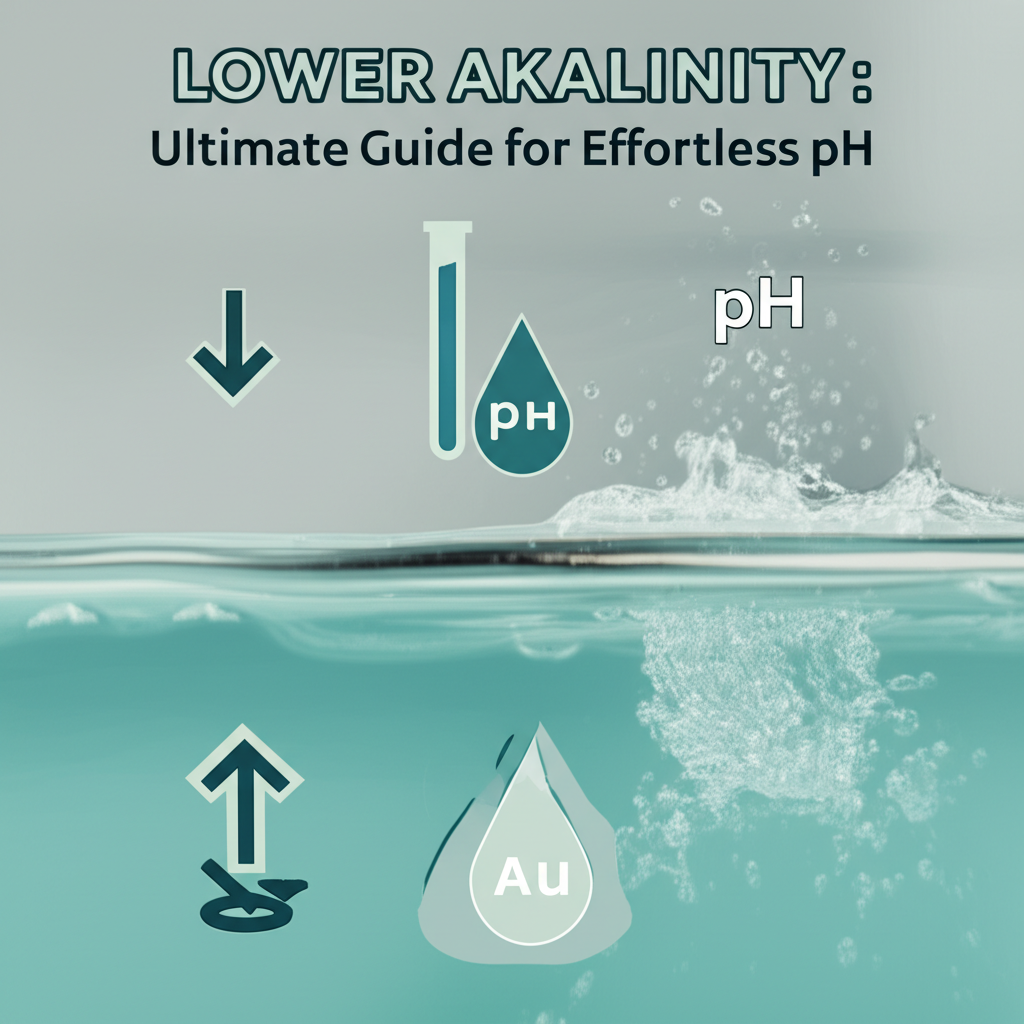
Lowering TA, or Total Alkalinity, is often the crucial step homeowners and aquatic enthusiasts overlook when struggling to maintain stable pH levels. While pH often gets all the attention, it’s total alkalinity that acts as the unsung hero, or sometimes the stubborn villain, in the quest for balanced water chemistry. Understanding and managing TA is fundamental to achieving effortless pH control, preventing a host of water quality issues, and ensuring a healthier, more enjoyable environment, whether it’s for a swimming pool, spa, or even an aquarium.
Understanding the Interplay: pH and Alkalinity
To truly master water chemistry, one must first grasp the intimate relationship between pH and Alkalinity.
pH (Potential of Hydrogen) measures the acidity or basicity of water on a scale of 0 to 14. A pH of 7 is neutral, below 7 is acidic, and above 7 is basic (or alkaline). For most applications, an ideal pH range is slightly basic, typically between 7.4 and 7.8. When pH is too high, it leads to issues like scale formation, cloudy water, and reduced sanitizer effectiveness. Too low, and it can cause corrosion and irritation.
Total Alkalinity (TA) refers to the concentration of alkaline substances, primarily bicarbonates, carbonates, and hydroxides, dissolved in the water. These substances act as buffers, resisting changes in pH. Think of TA as your water’s “pH guard,” absorbing acids or bases to keep the pH from fluctuating wildly. The ideal range for TA is generally between 80-120 parts per million (ppm).
The critical connection lies in TA’s buffering capacity. If your TA is too high, your water becomes overly resistant to pH adjustments. You might add acid to lower the pH, only to find it quickly “bounces back” to its original, high level. Conversely, if TA is too low, the pH will be highly unstable and can swing dramatically with minimal influence, making it difficult to maintain a consistent balance.
Why and When Lowering Total Alkalinity Becomes Necessary
While alkalinity is essential for pH stability, too much of a good thing can be detrimental. You’ll likely need to consider lowering TA if you observe the following:
Difficulty Lowering pH: This is the most common indicator. Even after significant acid additions, your pH remains stubbornly high or rapidly returns to high levels.
“pH Bounce”: The pH fluctuates frequently and drastically, indicating weak buffering capacity or an attempt to force it down against a high TA.
Scale Formation: High alkalinity, especially when combined with high pH and calcium hardness, contributes to calcium scaling on surfaces, equipment, and plumbing.
Cloudy Water: High pH and TA often lead to mineral precipitation, causing the water to appear cloudy or hazy.
Comfort Issues: High pH stemming from high TA can cause skin and eye irritation.
Ineffective Sanitizer: Chlorine and other sanitizers lose much of their effectiveness in high pH environments, even if their levels test correct.
Regular water testing is paramount to proactively manage your water chemistry. If your TA consistently tests above 120 ppm, it’s time to take action.
The Science of Reducing TA
The most effective and common method for lowering Total Alkalinity involves the careful addition of acid. The two main types of acid used are:
1. Muriatic Acid (Hydrochloric Acid): This is a strong, highly effective acid commonly used for significant adjustments.
2. Dry Acid (Sodium Bisulfate): A granular alternative that is safer to handle but less potent than muriatic acid.
When acid is added to water with high alkalinity, the acid first reacts with and consumes the bicarbonate buffers that contribute to TA. As these buffers are used up, the overall TA level decreases. Once a sufficient amount of the alkalinity is neutralized, the acid then starts to directly lower the water’s pH. This two-stage process is why lowering TA can feel like a slow battle; you’re essentially “paying off” the alkalinity debt before you can directly impact pH.
Practical Steps for Lowering TA Safely and Effectively
Lowering TA requires patience and precision. Rushing the process can lead to significant pH drops, damage, or even safety hazards.
1. Safety First: Always wear appropriate personal protective equipment (PPE), including gloves, eye protection, and old clothes when handling acids. Ensure good ventilation. Always add acid to water, never water to acid.
2. Test Your Water: Get an accurate reading of your current pH and TA levels. Knowing exactly what you’re dealing with is crucial. Note the volume of your body of water (pool, spa, etc.).
3. Calculate Dosage: Use an online calculator or follow product instructions to determine the recommended amount of acid needed to lower your TA by 10-20 ppm per increment. It’s always better to make small adjustments.
4. Dilute the Acid (Muriatic Acid): If using muriatic acid, dilute it. Take a clean plastic bucket partly filled with water, then slowly add the measured acid to the water. Never add water to acid.
5. Add Acid Slowly and Strategically:
With the circulation system running (but avoiding contact with skimmers), slowly pour the diluted acid into the deepest part of the water. Swirl it around gently to encourage mixing.
For pools, avoid adding it near the skimmer or directly over sensitive surfaces to prevent concentrated acid damage.
Avoid broadcasting it widely across the surface. Directing it into one area allows it to concentrate and effectively “burn off” alkalinity before it’s too diffused to impact pH.
6. Allow for Circulation and Aeration:
Allow the water to circulate for 2-4 hours after adding acid. This helps distribute the acid evenly and allows it to fully react with the alkalinity.
Crucially, aerate the water after adding acid. Aeration (e.g., running waterfalls, fountains, spa jets, or even an air stone) helps to drive out carbon dioxide from the water, which naturally allows the pH to rise slightly while the TA remains lower. This is a common technique known as the “aeration method” to raise pH after an acid addition without significantly impacting the newly lowered TA.
7. Retest and Repeat (if necessary): After 6-8 hours (or the next day), retest your TA and pH. If your TA is still too high, repeat the process. Always aim for incremental reductions (10-20 ppm at a time) to avoid overshooting your targets and causing wild pH swings.
Maintaining Optimal Balance
Once you’ve achieved your desired TA and pH ranges (typically 80-120 ppm for TA and 7.4-7.8 for pH), regular testing and consistent maintenance are key.
Test Regularly: Develop a habit of testing your water at least weekly, or more often if it’s heavily used.
Understand Your Source Water: If your tap water naturally has high TA, you might need to adjust more frequently.
Avoid Alkalinity-Raising Products: Be mindful of products that can inadvertently raise alkalinity, such as some pH increasers (often sodium carbonate, which raises both pH and TA significantly).
* Address Other Imbalances: Ensure calcium hardness is also in range (180-220 ppm for pools) as it can also contribute to scaling issues at high pH and TA.
Mastering the art of managing Total Alkalinity is a cornerstone of effortless pH control. By understanding its role as a pH buffer and following a careful, step-by-step approach to lowering it when necessary, you can ensure your water remains balanced, healthy, and crystal clear, year-round. It’s an investment in the longevity of your equipment and the enjoyment of your water environment.