- The Critical Role of Pool pH
- Recognizing High Pool pH
- Understanding pH Reducer formulations
- Using a pH Reducer Safely and Effectively
- Maintaining Optimal Balance
pH Reducer is the indispensable chemical agent for anyone striving to maintain crystal-clear, safe, and comfortable swimming pool water. Achieving the perfect pH balance in your pool is not merely about aesthetics; it’s fundamental to swimmer health, equipment longevity, and the overall efficiency of your sanitization system. High pH levels are a common adversary for pool owners, leading to a host of problems that can quickly detract from the enjoyment of your aquatic haven.
The Critical Role of Pool pH
Understanding pH is the first step toward mastering pool chemistry. pH is a measure of how acidic or basic (alkaline) your water is, rated on a scale of 0 to 14. For swimming pools, the ideal pH range is between 7.4 and 7.6, closely mirroring the pH of human tears. Deviating from this narrow band can have significant consequences:
Swimmer Comfort and Health: High pH (above 7.8) can cause eye irritation, skin dryness, and even rashes, making swimming an unpleasant experience. It can also reduce the effectiveness of chlorine, potentially allowing harmful bacteria and algae to proliferate.
Equipment Preservation: Water with consistently high pH levels promotes scale formation. This white, crusty deposit can accumulate on pool surfaces, filters, heaters, and plumbing, ultimately reducing efficiency and shortening the lifespan of expensive equipment.
Sanitizer Efficiency: Chlorine, the most common pool sanitizer, is significantly less effective in high pH water. At a pH of 8.0, only about 20% of the active chlorine is available to kill contaminants, compared to nearly 80% at 7.4. This means you’ll need to use more chlorine, increasing costs and potentially leading to other chemical imbalances.
Recognizing High Pool pH
High pH isn’t always immediately obvious, but there are tell-tale signs:
Cloudy Water: One of the most common indicators, often due to mineral precipitation or reduced sanitizer effectiveness.
Scaling: White, rough deposits on pool walls, ladders, and around water lines.
Algae Bloom: If your chlorine isn’t working effectively due to high pH, algae can take hold more easily.
Chlorine Odor/Irritation: Ironically, a strong “chlorine smell” often indicates ineffective chlorine due to high pH, not too much chlorine. The combined chloramines cause irritation.
Sources of high pH include the alkalinity of your source water, aeration (from waterfalls or jet action), and the addition of certain pool chemicals like calcium hypochlorite shock.
Understanding pH Reducer formulations
When your test kit reveals a pH above the optimal 7.6, it’s time to turn to a pH Reducer. These products are essentially acidic compounds designed to safely lower the pH level of your pool water. The two most common types available to pool owners are:
1. Sodium Bisulfate (Dry Acid): This granular acid is user-friendly and generally safer to handle than liquid acids. It dissolves in water to release hydrogen ions, effectively lowering pH and total alkalinity.
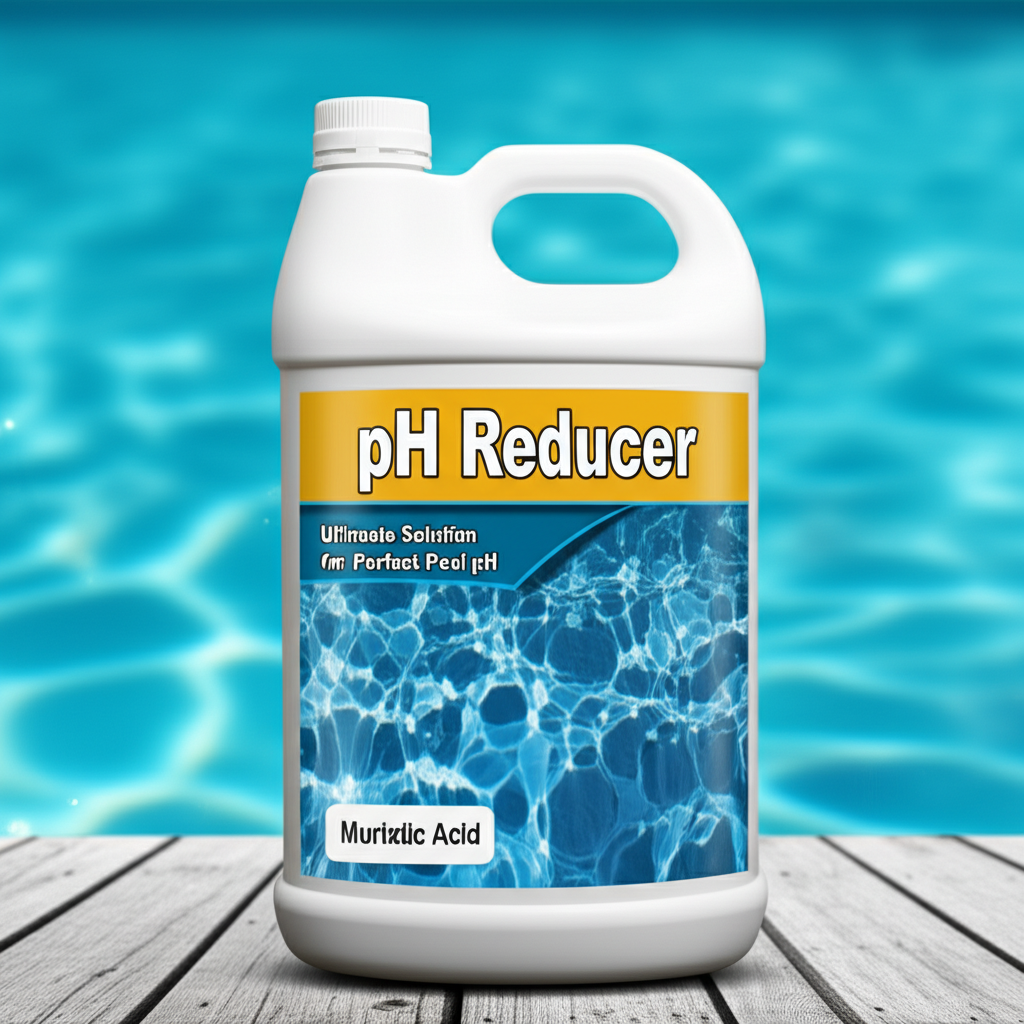
2. Muriatic Acid (Hydrochloric Acid): A liquid acid that is highly effective at lowering both pH and total alkalinity. While potent and highly efficient, Muriatic Acid requires careful handling due to its corrosive nature. It’s often favored by experienced pool professionals for its rapid action and cost-effectiveness. When using Muriatic Acid, extreme caution is paramount. Always wear appropriate personal protective equipment (PPE), including gloves, eye protection, and a respirator. Add the acid slowly to water (never water to acid) and ensure good ventilation.
Using a pH Reducer Safely and Effectively
Correct application of a pH reducer is crucial for achieving desired results and ensuring safety.
1. Test Your Water: Always start by testing your pool water’s pH and Total Alkalinity (TA) levels using a reliable test kit or strips. Knowing the current levels helps you calculate the correct dosage.
2. Calculate Dosage: Refer to the specific product instructions for your pH reducer. Most manufacturers provide dosage charts based on pool volume and the desired pH reduction. It’s often better to add less than you think you need, as you can always add more later.
3. Dilution (Especially for Muriatic Acid): For liquid Muriatic Acid, it’s highly recommended to dilute it by pouring the measured acid into a large bucket of pool water (never pour water into acid, as this can cause a dangerous reaction).
4. Application:
Turn off your pool pump before adding chemicals.
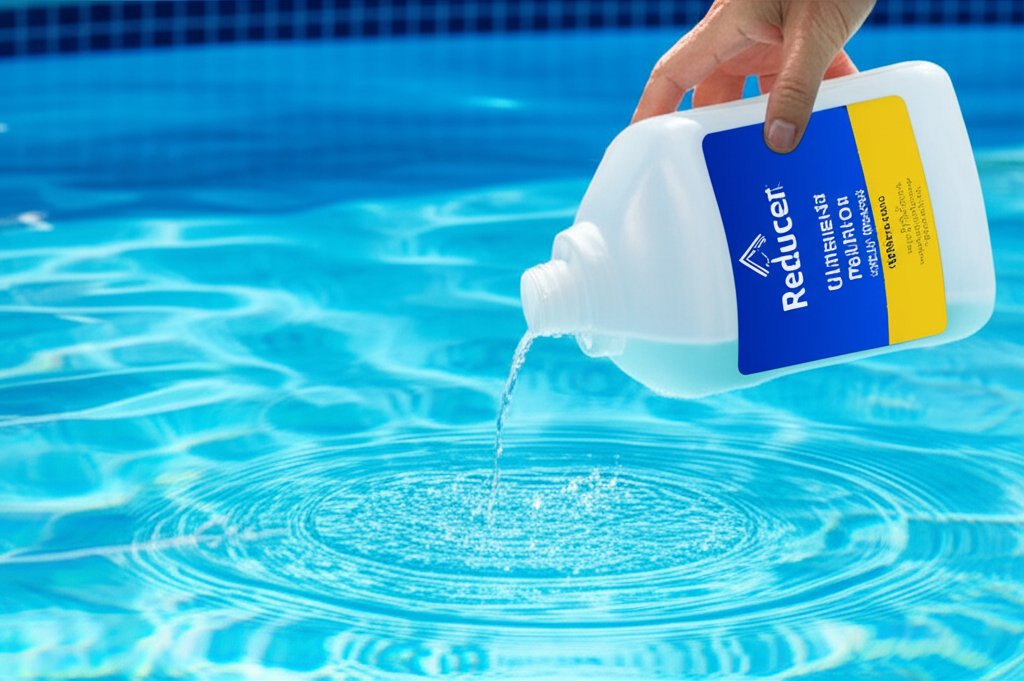
Slowly and carefully pour the diluted pH reducer evenly across the deepest part of your pool, away from skimmers and returns. This allows for even distribution and prevents concentrated pockets that could damage liners or equipment.
Never “dump” a large amount in one spot.
For granular pH reducer, pre-dissolve it in a bucket of water before adding, following the same distribution method.
5. Circulation and Re-testing: After applying the pH reducer, allow your pump to circulate the water for at least 4-6 hours (or overnight) to ensure thorough mixing. After this period, re-test your pH levels. If the pH is still too high, repeat the process with a smaller dose.
Important Safety Precautions for Muriatic Acid:
PPE is Non-Negotiable: Wear chemical-resistant gloves, safety goggles or a face shield, and old clothing that covers your skin.
Ventilation: Work in a well-ventilated area to avoid inhaling fumes.
Storage: Store in a cool, dry, well-ventilated area, securely capped and out of reach of children and pets. Never store near chlorine or other oxidizing agents.
* First Aid Ready: Have a source of clean water nearby (like a garden hose) in case of skin or eye contact.
Maintaining Optimal Balance
Regular testing (at least 2-3 times per week) is the cornerstone of effective pool maintenance. Once you’ve achieved the ideal pH range with a pH reducer, consistency is key. Keep an eye on factors that can influence pH and total alkalinity, and make minor adjustments as needed. A balanced pool requires attention to pH, total alkalinity, calcium hardness, and sanitizer levels working in harmony.
In conclusion, a pH reducer is an essential tool in every pool owner’s arsenal. By understanding its purpose, choosing the right type, and applying it safely and correctly, you can effectively combat high pH, ensuring your pool remains a sparkling, comfortable, and healthy oasis for everyone to enjoy.