- Why Your Pool Deck Deserves Careful Consideration
- Pavers: The Art of Versatility for Your Pool Deck
- Types of Pavers for Your Deck
- Advantages of a Paver Pool Deck
- Considerations for Paver Installation
- Concrete Deck: Modern & Customizable Solutions
- Types of Concrete Finishes for Your Deck
- Advantages of a Concrete Deck
- Considerations for Concrete Pool Decks
- Choosing the Best Option for Your Stunning Pool Deck
Pool Deck: Crafting the Perfect Oasis with Pavers and Concrete
A pool deck is more than just a surface surrounding your swimming pool; it’s a vital extension of your living space, a hub for relaxation, entertainment, and a key element in defining your backyard’s aesthetic. Choosing the right material for this crucial area involves balancing durability, safety, cost, and visual appeal. Two of the most popular and versatile options available today are pavers and concrete, each offering distinct advantages to help you create a stunning and functional outdoor sanctuary.
Why Your Pool Deck Deserves Careful Consideration
Before diving into the specifics of pavers and concrete, it’s worth understanding why your pool deck matters so much. Firstly, safety is paramount. The surface must be non-slip, particularly when wet, to prevent accidents. Secondly, comfort is key; the material should ideally remain cool underfoot, even on scorching summer days. Aesthetics play a huge role, tying together your home’s exterior, landscaping, and the pool itself. Finally, durability and ease of maintenance ensure your investment stands the test of time and continues to look beautiful for years to come.
Pavers: The Art of Versatility for Your Pool Deck
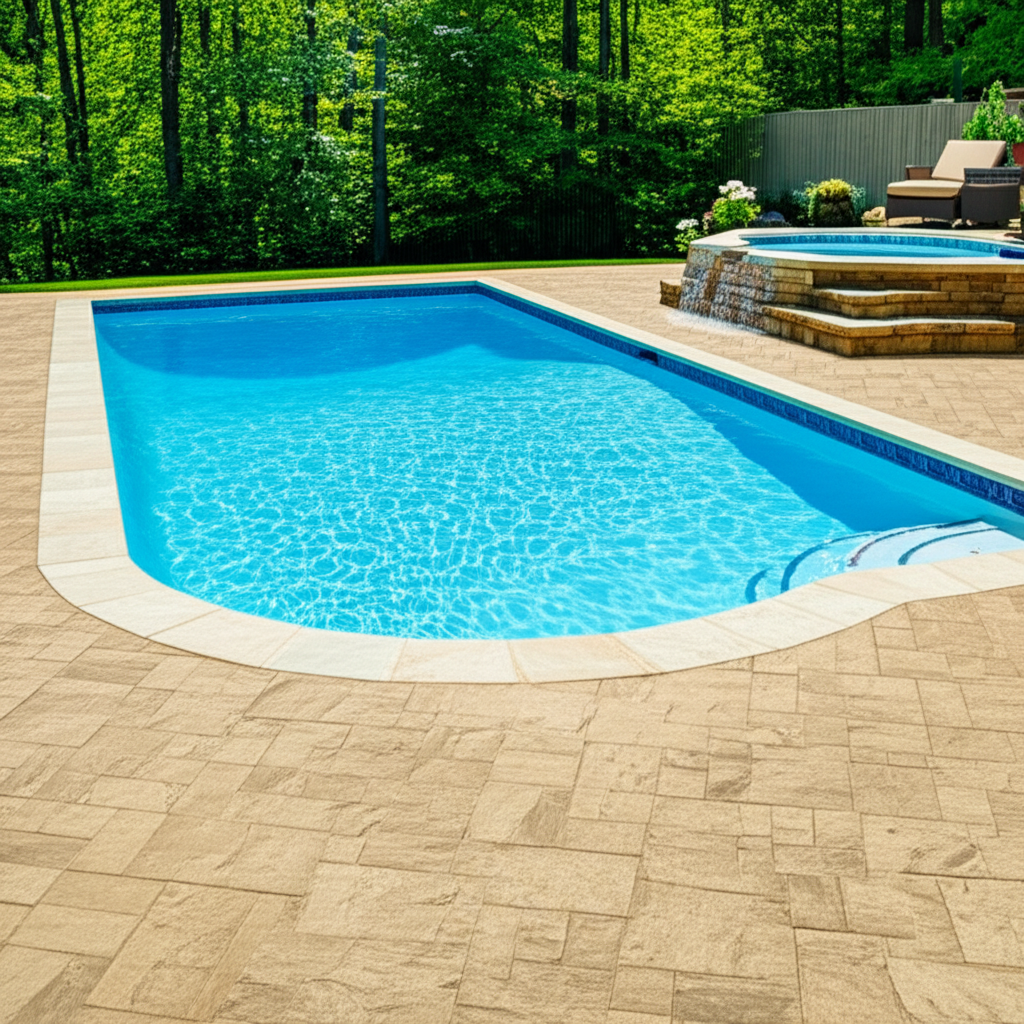
Pavers are individual interlocking units, typically made from concrete, natural stone, or brick, laid over a prepared base. Their inherent modularity is one of their greatest strengths, offering unparalleled design flexibility.
Types of Pavers for Your Deck
Concrete Pavers: The most common and versatile option, available in a vast array of colors, shapes, and sizes. They can mimic the look of natural stone, brick, or even wood.
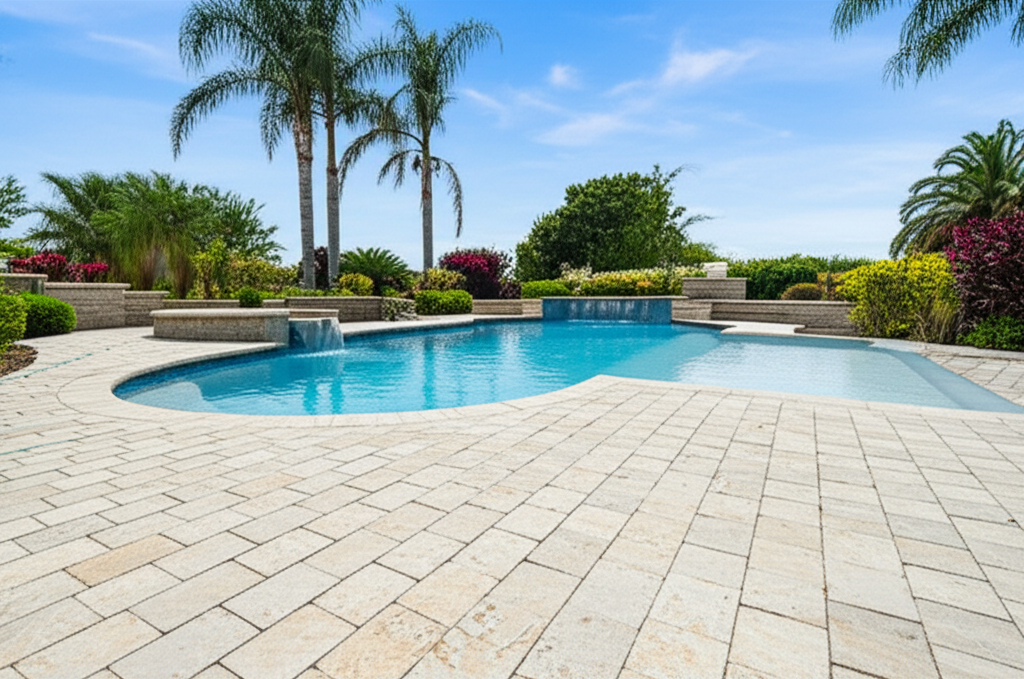
Natural Stone Pavers: Materials like travertine, flagstone, and bluestone bring an undeniable elegance and organic beauty. Travertine, in particular, is lauded for its ability to stay remarkably cool under direct sunlight, a huge advantage for a pool deck.
Brick Pavers: Known for their classic, rustic charm, brick pavers offer a warm, earthy aesthetic that complements many architectural styles.
Advantages of a Paver Pool Deck
Aesthetic Versatility: With countless patterns, colors, and textures, pavers allow for truly customized designs, from intricate herringbone to elegant running bond.
Easy Repair: Unlike a solid slab, individual pavers can be lifted and replaced if damaged or stained, making repairs relatively straightforward and invisible.
Excellent Drainage: The joints between pavers allow water to seep through, reducing standing water and runoff, which can be further enhanced with permeable paver systems.
Slip Resistance: Many pavers come with naturally textured or tumbled surfaces, offering superior grip even when wet.
Durability and Flexibility: Pavers are designed to flex with ground movement, reducing the likelihood of cracking compared to rigid surfaces.
Cool Underfoot: Lighter colored pavers, especially natural stone like travertine, absorb less heat, keeping the surface more comfortable on hot days.
Considerations for Paver Installation
While highly appealing, pavers typically involve higher upfront material and installation costs than basic concrete. Proper installation, including a well-prepared base and expert laying, is crucial to prevent shifting or unevenness over time. While polymeric sand helps prevent weeds between joints, occasional maintenance may be needed.
Concrete Deck: Modern & Customizable Solutions
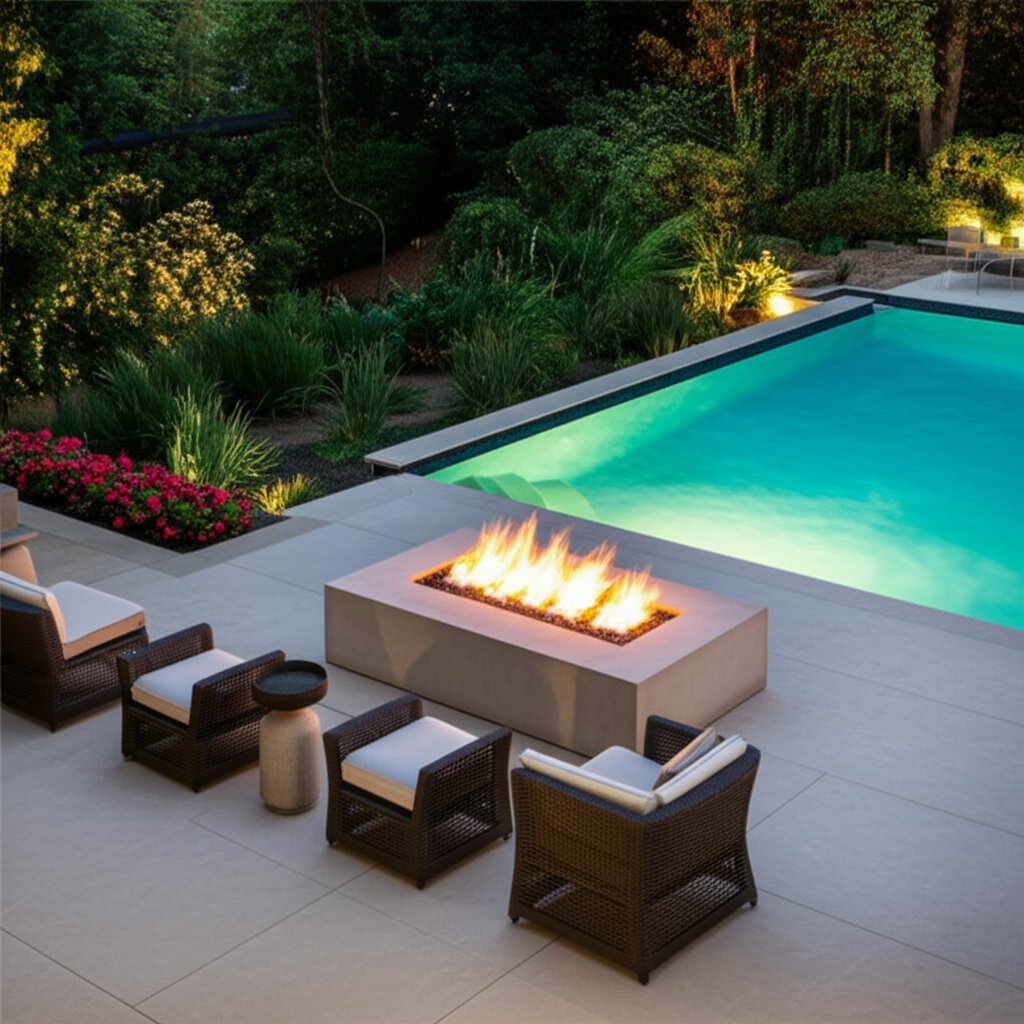
Often seen as the traditional choice, concrete has evolved far beyond the plain grey slab. Modern techniques allow for incredible customization, making a concrete deck a compelling option for many homeowners.
Types of Concrete Finishes for Your Deck
Broom Finish: The most economical option, created by dragging a broom across wet concrete to create a textured, slip-resistant surface.
Stamped Concrete: This highly popular technique involves pressing molds into wet concrete to mimic the look of natural stone, brick, wood, or even tile. It offers immense design flexibility.
Exposed Aggregate: Achieved by washing away the top layer of cement paste to expose the decorative aggregates (pebbles, crushed stone) beneath, offering a unique, textured, and natural appearance.
Colored Concrete: Pigments can be added directly to the concrete mix (integral color) or applied to the surface as stains or dyes, providing a uniform or variegated color palette.
Advantages of a Concrete Deck
Cost-Effective: While custom finishes can increase the price, a basic broom-finish concrete slab is generally the most budget-friendly pool deck option.
Durability and Longevity: When properly installed and maintained, concrete is incredibly strong and can last for decades.
Seamless Surface: A solid concrete slab means no joints for weeds to sprout through, offering a clean, uniform look.
Design Versatility: Stamped and colored concrete can convincingly replicate expensive materials at a fraction of the cost, providing a wide range of aesthetic possibilities.
Low Maintenance: Generally, concrete requires minimal maintenance beyond cleaning and periodic sealing.
Considerations for Concrete Pool Decks
The primary concern with concrete is cracking. While proper reinforcement, control joints, and curing can mitigate this, hairline cracks can still develop over time due to ground movement or temperature fluctuations. Repairs for damaged concrete are often more noticeable than with pavers, as matching patches can be challenging. Darker concrete colors can absorb a lot of heat, making the surface quite hot underfoot during peak summer.
Choosing the Best Option for Your Stunning Pool Deck
Deciding between pavers and a concrete deck ultimately comes down to your priorities:
Budget: Basic concrete is typically the most economical, with stamped concrete or natural stone pavers being higher investments.
Desired Aesthetic: Do you prefer the rich, modular look of pavers or the expansive, seamless appearance of concrete?
Maintenance Tolerance: While both require cleaning and sealing, pavers might need occasional re-sanding of joints or weed removal.
Climate: Consider resistance to freeze-thaw cycles (for cold climates) and heat absorption (for hot climates).
* Future Modifications: Pavers allow for easier individual replacement or lifting for underground repairs.
Whichever material you lean towards, ensure professional installation. A beautifully designed and properly installed pool deck will not only enhance the safety and functionality of your pool area but also significantly boost the overall appeal and value of your home. Consult with experienced pool deck contractors to explore samples, discuss design ideas, and make an informed decision that brings your backyard oasis vision to life.