Pool pH is arguably the most critical factor in maintaining a healthy, safe, and enjoyable swimming environment. It’s the cornerstone of effective water chemistry, impacting everything from swimmer comfort to the longevity of your pool equipment and the efficiency of your sanitizers. Understanding how to manage and balance your pool’s pH isn’t just a suggestion; it’s a fundamental requirement for any pool owner seeking crystal-clear water and a worry-free swimming experience.
What Exactly is Pool pH?
In scientific terms, pH is a measure of the acidity or alkalinity of water. The pH scale ranges from 0 to 14, where 7.0 is considered neutral. Readings below 7.0 indicate acidity, while readings above 7.0 indicate alkalinity. For swimming pools, the ideal pH range is remarkably narrow: between 7.4 and 7.6. This range is chosen because it closely matches the pH of human tears, ensuring maximum comfort for swimmers’ eyes and skin. More importantly, it’s the optimal range for chlorine sanitizers to perform effectively, allowing them to kill bacteria, algae, and other contaminants efficiently.
The Crucial Role of Balanced pH Levels
Maintaining the correct pH balance in your pool is vital for several reasons:
Swimmer Comfort: Out-of-balance pH can cause stinging eyes, itchy skin, and even affect hair and swimwear. Low pH burns, high pH causes irritation.
Sanitizer Effectiveness: Chlorine, the most common pool sanitizer, loses significant effectiveness outside the ideal pH range. If pH is too high, less chlorine is available to sanitize. If pH is too low, chlorine dissipates too quickly.
Pool Equipment Longevity: Extremely acidic water (low pH) can corrode metal components like ladders, heaters, and pump parts. Highly alkaline water (high pH) can lead to scale buildup on surfaces and equipment, reducing efficiency and lifespan.
Water Clarity: Imbalanced pH can contribute to cloudy water, making your pool less inviting and potentially harder to clean.
The Dangers of Imbalanced Pool pH Levels
Venturing outside the ideal 7.4-7.6 range can lead to a host of problems:
When pH is Too High (Alkaline, above 7.6):
Chlorine Inefficiency: Your chlorine will be largely ineffective, even if levels test properly. This means increased sanitizer usage and potential for algae blooms.
Cloudy Water: Calcium can precipitate out of the water, causing cloudiness and an unsightly appearance.
Scale Formation: Unsightly grayish-white scale can build up on pool surfaces, equipment, and even inside pipes.
Swimmer Discomfort: Eyes may become red and irritated, and skin can feel dry and itchy.
When pH is Too Low (Acidic, Below 7.4):
Corrosion: Metal components, including ladders, handrails, heaters, and pump impellers, can corrode and degrade rapidly.
Plaster/Grout Damage: Acidic water can dissolve calcium from plaster and grout, leading to etching, staining, and deterioration of pool surfaces.
Chlorine Depletion: Chlorine will dissipate too quickly from the water, requiring more frequent addition of sanitizer.
Swimmer Discomfort: Stinging eyes, irritated skin, and bleached swimwear.
How to Test Your Pool pH Levels Accurately
Regular testing is the cornerstone of effective pool chemistry maintenance. There are several reliable methods:
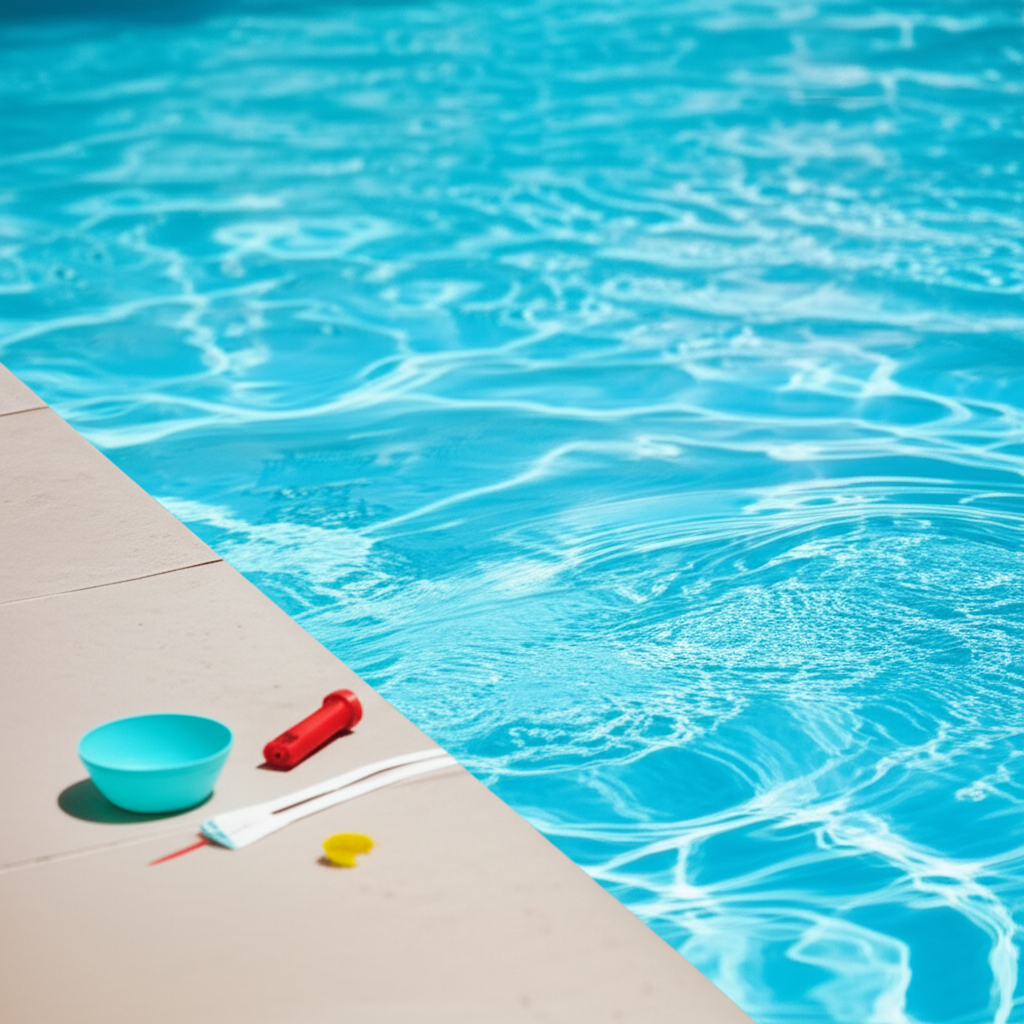
1. Test Strips: The simplest method. Dip a strip into the water, wait a few seconds, and compare the color changes to the chart provided. Great for quick checks.
2. Liquid Test Kits (DPD Kits): More accurate than strips, these kits use reagents that change color based on the chemical levels in the water. They typically test for pH and chlorine.
3. Digital Testers: The most precise option, these electronic devices provide a direct digital readout of your pH. They require calibration but offer excellent accuracy.
Aim to test your pool’s pH at least 2-3 times per week, or daily during heavy use or after significant rain.
Adjusting Pool pH: Using a pH Increaser or Decreaser
Once you know your pH level, you’ll need the right chemicals to bring it back into balance.
pH Increaser:
If your pH levels are below 7.4 (acidic), you’ll need to increase the pH. Common pH increaser products include:
Soda Ash (Sodium Carbonate): The most common option, it effectively raises pH.
Baking Soda (Sodium Bicarbonate): Primarily raises total alkalinity, but also has a mild effect on pH.
How to Apply pH Increaser:
1. Always read and follow the manufacturer’s instructions on the product packaging.
2. Pre-dissolve the recommended amount of pH increaser in a bucket of pool water (never add water to chemicals).
3. Ensure your pump is running.
4. Slowly pour the dissolved solution into the deep end of your pool, away from skimmer openings.
5. Wait several hours (4-6+) and retest before adding more, as it takes time for the chemicals to fully disperse and register.
pH Decreaser:
If your pH levels are above 7.6 (alkaline), you’ll need to decrease the pH. Common pH decreaser products include:
Muriatic Acid (Hydrochloric Acid): A potent liquid acid that effectively lowers both pH and total alkalinity. Handle with extreme caution, wearing appropriate safety gear.
Sodium Bisulfate (Dry Acid): A granular acid that is safer to handle than muriatic acid and works well to lower pH.
How to Apply pH Decreaser:
1. Always wear safety goggles and gloves, especially with muriatic acid. Read the manufacturer’s instructions carefully.
2. For muriatic acid, slowly pour the recommended amount into the deep end of the pool while the pump is running, carefully pouring into the water to avoid splashing.
3. For sodium bisulfate, pre-dissolve it in a bucket of pool water first, then pour it slowly into the deep end.
4. Allow 4-6 hours for the chemicals to circulate and react before retesting the pH.
Achieving and Maintaining Ideal Pool pH
Effortless balance comes from consistent practice. Here’s a basic routine:
1. Test Regularly: Develop a routine for testing your pool’s pH, chlorine, and total alkalinity (TA) levels.
2. Adjust Gradually: When making pH adjustments, always add chemicals in small increments. Over-correcting can lead to a seesaw effect, making it harder to stabilize.
3. Consider Total Alkalinity (TA): TA acts as a buffer for pH. If your TA is too low, your pH will be difficult to stabilize and prone to drastic swings. The ideal TA range is 80-120 ppm. Adjust TA before pH if both are off significantly.
4. Aeration and pH: Excessive aeration (waterfalls, jets) can naturally raise pH over time by releasing carbon dioxide from the water. Be mindful of this in your maintenance routine.
5. Understand Your Source Water: Test your tap water’s pH and alkalinity. This can give you insights into your pool’s baseline chemistry.
Mastering your pool’s pH is a fundamental skill that transforms pool ownership from a chore into a pleasure. By consistently testing and making mindful adjustments, you ensure your pool remains a sparkling, safe, and inviting oasis for all to enjoy. Remember, consistent care leads to clear water and effortless balance.