- Why Pool Skimming is Non-Negotiable
- The Mechanics of Optimal Pool Skimming
- Enhancing Surface Debris Removal: Beyond the Basics
- Troubleshooting Common Skimming Issues
Pool skimming is arguably the most fundamental and immediate action any pool owner can take to maintain a sparkling clean and healthy swimming environment. While often overlooked in favor of more complex cleaning routines, the simple act of removing floating debris from the water’s surface is the first line of defense against a host of potential problems, transforming your pool from an ordinary basin into an effortless oasis of cleanliness. It’s a proactive step that safeguards water quality, extends equipment life, and enhances the overall enjoyment of your aquatic retreat.
Why Pool Skimming is Non-Negotiable
The importance of consistent pool skimming cannot be overstated. From leaves, twigs, and insects to pollen, dust, and even sunscreen residue, the surface of your pool is constantly accumulating contaminants. Left unattended, these seemingly innocuous particles can quickly degrade your pool’s pristine condition and lead to more significant issues:
Aesthetic Appeal: A skimmed pool is a visually inviting pool. Nothing detracts from the allure of crystal-clear water faster than visible debris floating on top. Regular skimming ensures your pool always looks its best.
Water Quality and Hygiene: Organic matter, like leaves and insects, begins to decompose once submerged. This process introduces phosphates and nitrates, which serve as food sources for algae and bacteria. Skimming removes these pollutants before they have a chance to sink and break down, significantly reducing the chemical demand and preventing potential health hazards.
Chemical Balance: Decomposing organic material also consumes chlorine, the primary disinfectant in most pools. By regularly removing surface debris, you reduce the workload on your sanitizing chemicals, helping to maintain a stable chemical balance and potentially saving money on chemical top-ups.
Equipment Longevity: Every piece of debris that enters your pool eventually makes its way to the filtration system. Oversized items or an excessive load of small particles can clog skimmer baskets, place undue strain on your pump, and eventually overwhelm your filter. Consistent skimming protects these vital components, extending their lifespan and preventing costly repairs.
The Mechanics of Optimal Pool Skimming
Effective pool skimming involves more than just occasionally dipping a net into the water. It requires a systematic approach, whether you’re using manual tools or relying on automated systems. Understanding how your pool’s skimmers work and how to augment their efforts is key to success.
Manual Surface Debris Removal:
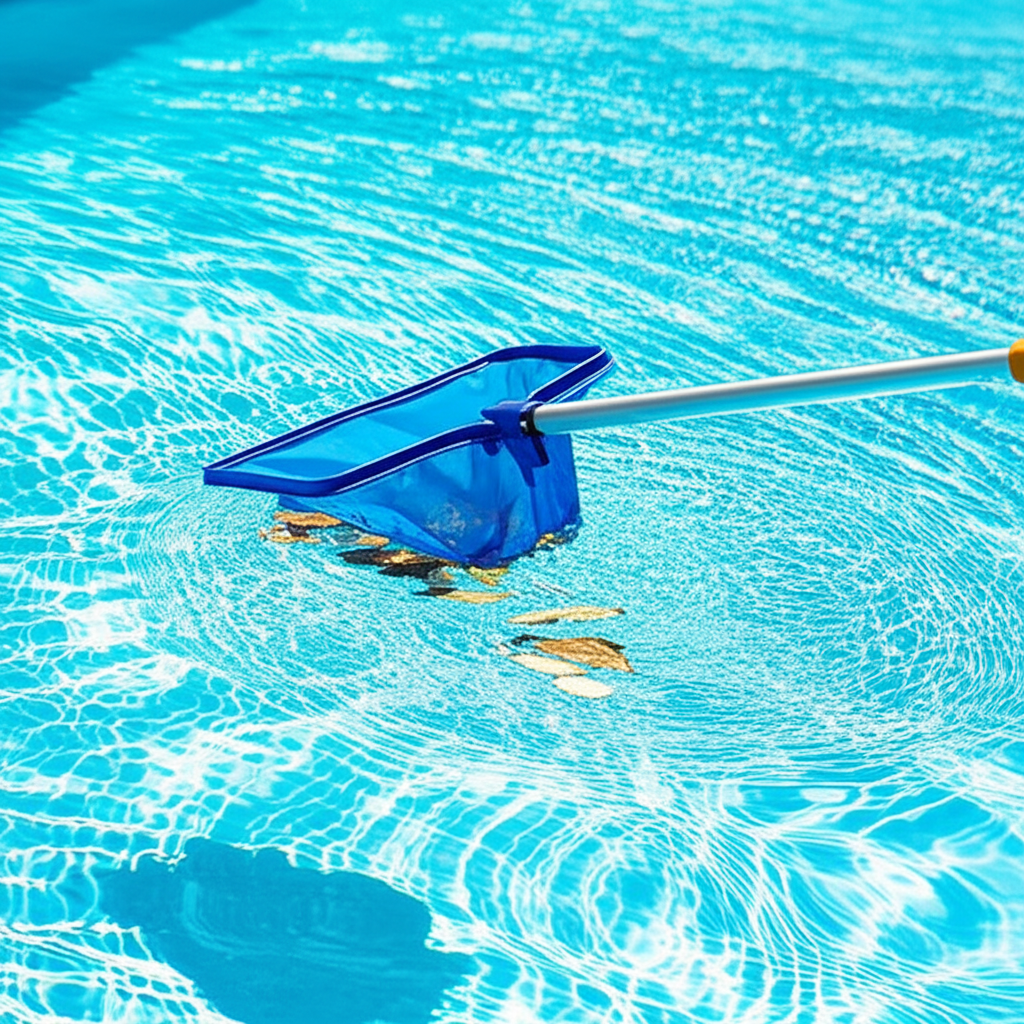
For immediate and targeted cleaning, a good skimmer pole and net are indispensable.
Technique: Use slow, deliberate sweeps across the pool’s surface, particularly in areas where debris tends to accumulate due to wind or water currents. Always empty your net frequently to prevent re-depositing debris.
Frequency: Daily skimming is ideal, especially for pools located under trees or in windy areas. After heavy rain or strong winds, it’s advisable to skim multiple times.
Automatic Skimming with Built-in Skimmers:
Most in-ground and some above-ground pools feature a built-in skimmer located at the waterline. This device draws water from the surface, trapping large debris in a removable basket before the water proceeds to the pump and filter.
Weir Door: The small, hinged flap at the mouth of the skimmer is called the weir door. It plays a crucial role by creating a surface tension that increases the velocity of water entering the skimmer, pulling debris in more effectively. Ensure it moves freely.
Skimmer Basket: This is the primary collection point for large debris. It’s vital to empty the skimmer basket daily, or even multiple times a day if the debris load is heavy. A full basket restricts water flow, reduces skimming efficiency, and puts stress on your pump.
Enhancing Surface Debris Removal: Beyond the Basics
While built-in skimmers are a workhorse, there are other tools and practices to improve your surface debris removal efforts:
Floating Automatic Skimmers: These independent units float on the pool’s surface, propelled by their own pump or connected to an existing skimmer line, continuously scooping up debris. They offer a hands-off solution for ongoing surface cleanliness.
Robotic Pool Cleaners with Skimming Function: Some advanced robotic cleaners are designed not only to clean the pool floor and walls but also to patrol the waterline, actively skimming the surface.
Water Level: Maintaining the correct water level is critical. If the water is too low, the skimmer mouth won’t draw in enough surface water. If it’s too high, the weir door won’t function effectively. Aim for the water level to be about halfway up the skimmer opening.
Pump Operation: Running your pool pump for an adequate duration each day ensures continuous water circulation through the skimmer, maximizing its debris-collecting power.
Troubleshooting Common Skimming Issues
Even with diligent efforts, you might encounter issues:
Poor Suction: Check your skimmer basket and pump basket for clogs. Ensure the water level is correct and that the weir door isn’t stuck.
Debris Bypassing Skimmer: This could indicate a problem with the weir door, low water flow, or improper water circulation patterns that push debris away from the skimmer opening.
* Air in the System: If you hear gurgling or see excessive air bubbles in your pump or return jets, check for leaks in the skimmer line, a loose skimmer lid, or a low water level exposing the skimmer opening.
Ultimately, consistent and thorough pool skimming is not just a chore; it’s an investment in your pool’s health and your swimming pleasure. By making surface debris removal a regular part of your pool maintenance routine, you ensure clearer water, a longer lifespan for your equipment, and a perpetually inviting swimming environment ready for enjoyment at a moment’s notice.