Water Chemistry is the backbone of a healthy, inviting, and long-lasting swimming pool. Achieving and maintaining the perfect balance in your pool might seem like a daunting task, involving a confusing array of tests and substances. However, with a foundational understanding and a consistent routine, reaching effortless pool balance is entirely achievable, transforming your backyard oasis into a consistently crystal-clear haven for relaxation and fun.
The Indisputable Importance of Balanced Water Chemistry
Beyond aesthetic appeal, the implications of poor water chemistry are vast and significant. Imbalanced water can lead to a host of problems, from swimmer discomfort to expensive equipment damage. Extremely acidic water can irritate skin and eyes, and corrosive water will etch plaster, degrade liners, and deteriorate metal components like heaters, ladders, and pump seals. Conversely, highly alkaline or hard water can result in scale formation on surfaces and equipment, reducing efficiency and lifespan. Most critically, improperly balanced water fails to effectively sanitize, creating an environment ripe for bacteria, algae, and other pathogens to thrive, posing serious health risks to swimmers. Understanding the various parameters and how they interact is the first step towards mastering your pool’s health.
Understanding Your Pool’s Water Chemistry: Key Parameters
To achieve effortless pool balance, you need to become familiar with the primary components of pool water chemistry. These are the critical metrics you’ll test for regularly and adjust using specific pool chemicals.
pH: This measures the acidity or alkalinity of your water. The ideal range for pools is generally 7.4 to 7.6 (some sources extend to 7.8). A low pH means acidic water, which is corrosive; a high pH means alkaline water, which can lead to scaling and reduce sanitizer effectiveness.
Total Alkalinity (TA): Often called the “pH buffer,” TA helps keep your pH stable, preventing drastic fluctuations. The ideal range is typically 80-120 parts per million (ppm). Low TA makes pH erratic, while high TA can make it difficult to adjust pH and can contribute to cloudy water.
Calcium Hardness (CH): This measures the amount of dissolved calcium in your water. The recommended range is 200-400 ppm. Too low, and the water will seek calcium from your pool’s plaster or grout, leading to etching; too high, and you risk scaling on surfaces and equipment.
Sanitizer Levels (e.g., Free Chlorine or Bromine): This is your primary defense against bacteria, viruses, and algae. For chlorine, the ideal range for Free Available Chlorine (FAC) is 1-3 ppm. Maintaining this level is crucial for effective disinfection. Bromine use is common in spas and some pools, with different recommended levels.
Cyanuric Acid (CYA): Also known as stabilizer or conditioner, CYA protects chlorine from degradation by the sun’s UV rays, making it last longer. The ideal range is typically 30-50 ppm (some allow up to 80 ppm for saltwater pools). Too little CYA means chlorine dissipates too quickly; too much can lead to “chlorine lock,” where chlorine becomes ineffective.
The Role of Pool Chemicals in Balancing Your Water
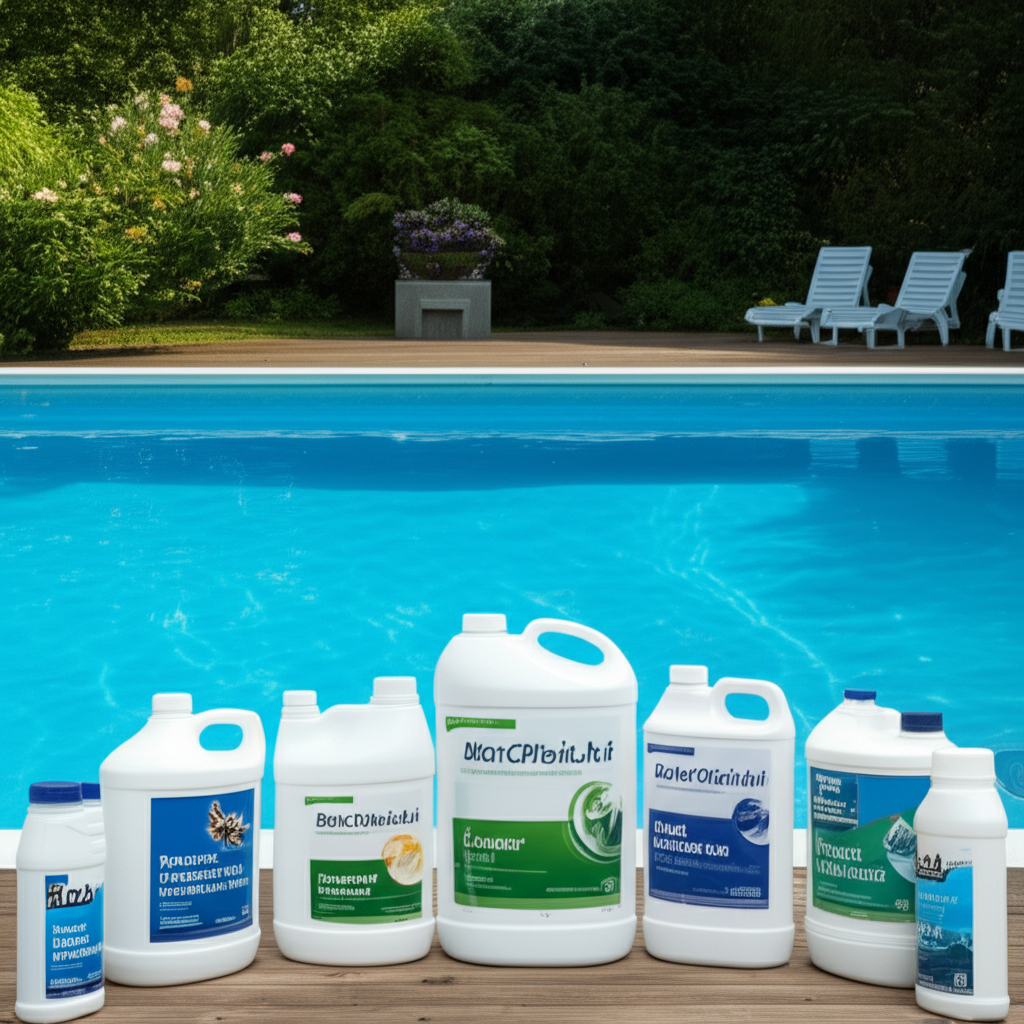
Pool chemicals are the tools you use to manipulate these parameters within their optimal ranges. Think of them not as mysterious concoctions, but as precise instruments for fine-tuning your water.
pH Adjusters:
pH Increaser: Typically soda ash (sodium carbonate), used to raise low pH.
pH Decreaser: Typically muriatic acid (hydrochloric acid) or dry acid (sodium bisulfate), used to lower high pH or high alkalinity.
Alkalinity Increaser: Sodium bicarbonate (baking soda), used to raise low total alkalinity.
Calcium Hardness Increaser: Calcium chloride, used to raise low calcium hardness.
Sanitizers: Chlorine (in various forms like tablets, granular, liquid) or bromine.
Stabilizer: Cyanuric acid granular, used to increase low CYA levels.
It’s vital to remember that adding pool chemicals should always follow accurate testing and manufacturer’s instructions. Adding too much or the wrong chemical can quickly throw your pool further out of balance or even damage equipment.
Developing an Effortless Routine for Pool Balance
The key to effortless pool balance isn’t a complex chemical engineering degree; it’s a consistent routine.
1. Regular Testing: Invest in a reliable test kit – either liquid reagents or quality test strips. Test your water at least 2-3 times per week, more frequently during heavy use or after rain.
2. Order of Adjustment: When multiple parameters are off, there’s a recommended order for adjustment to minimize re-work:
Start with Total Alkalinity (low TA can make pH hard to manage).
Adjust pH next.
Then, address Calcium Hardness.
Finally, ensure your sanitizer levels are correct, adjusting CYA if needed.
3. Dose and Disperse: Always dilute liquid chemicals before adding them to the pool (read labels carefully!). Broadcast granular chemicals evenly over the pool surface or add them slowly to the skimmer with the pump running, allowing for good dispersion.
4. Allow Time and Retest: Don’t expect instant results. Most adjustments need several hours (or overnight) of circulation before they fully integrate. Retest before making further additions.
5. Maintain Filtration and Circulation: Your filter and pump are crucial partners in water chemistry. Keep your pump running for adequate hours each day (8-12 is common), and ensure your filter is clean and functioning correctly to remove contaminants that stress your chemistry.
6. Shock When Needed: Regular shocking (super chlorination) helps break down combined chlorine (chloramines) and other organic contaminants, “resetting” your sanitizer’s effectiveness.
Beyond the Basics: Troubleshooting Common Issues
Even with a routine, issues can arise.
Cloudy Water: Often a sign of imbalanced pH or alkalinity, insufficient sanitizer, or filtration issues. Address chemistry first, then check your filter.
Green Water: Almost always algae, indicating very low sanitizer levels, imbalanced pH, or high phosphates. Shocking, algaecide, and balancing pH are typical solutions.
* Skin/Eye Irritation: Usually due to low pH (acidic water) or high combined chlorine (chloramines). Test and adjust pH, and shock the pool.
Achieving effortless pool balance is an ongoing process, but by understanding the fundamentals of water chemistry and committing to a consistent testing and adjustment routine, you empower yourself to keep your pool sparkling, safe, and truly enjoyable. A little attention goes a long way in ensuring your swimming season is always perfect.