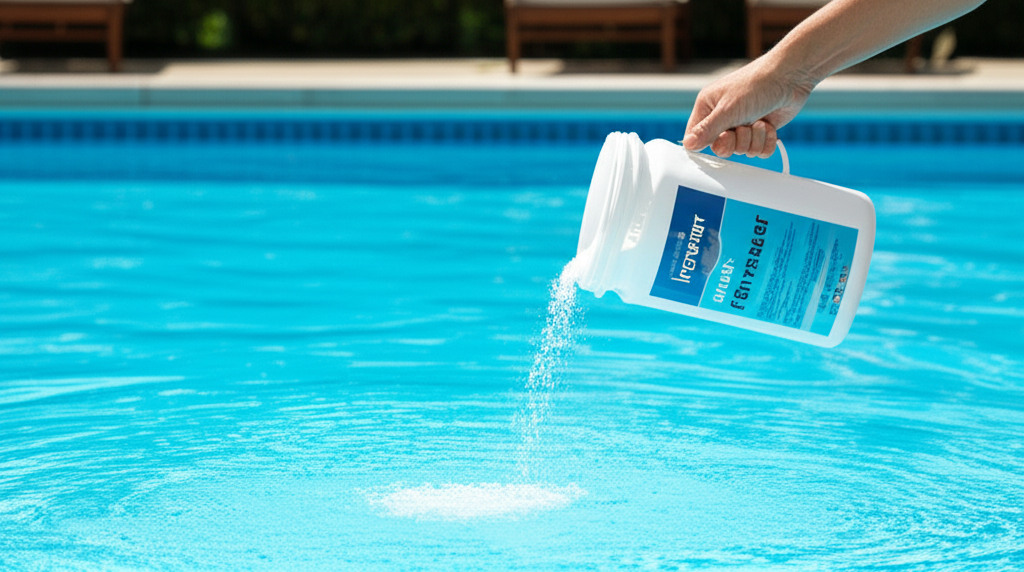
pH Increaser: Your Effortless Guide to Balanced Pool pH
A pH Increaser is an essential tool for any pool owner striving to maintain perfectly balanced water chemistry. Achieving the right pH level is not just about having a sparkling pool; it’s fundamental for swimmer comfort, the efficiency of your sanitizers, and the longevity of your pool equipment. Without proper pH management, your backyard oasis can quickly become an irritating and even damaging environment. This guide will walk you through understanding pH, identifying low pH, and expertly using a pH increaser to restore harmony to your pool.
Understanding Pool pH and Its Critical Balance
pH stands for “potential hydrogen” and is a measure of how acidic or basic your pool water is. The pH scale ranges from 0 to 14, where 7 is neutral. Values below 7 indicate acidity, and values above 7 indicate alkalinity (or basicity). For swimming pools, the ideal pH range is generally considered to be between 7.4 and 7.6, closely matching the pH of human tears. Some sources extend this slightly to 7.2-7.8, but the narrower range is often preferred for optimal comfort and chemical effectiveness.
Maintaining this delicate balance is critical for several reasons:
Sanitizer Efficiency: Chlorine, the most common pool sanitizer, works most effectively within the ideal pH range. If the pH is too low, chlorine is consumed rapidly, becoming less effective as a disinfectant. If the pH is too high, chlorine becomes sluggish and significantly less potent.
Swimmer Comfort: Water that is too acidic (low pH) can cause eye irritation (red, stinging eyes), dry skin, and itching. High pH water can also cause skin and eye discomfort, though typically less severe than low pH.
Equipment Protection: Low pH water is corrosive. It can slowly but surely eat away at metal components in your pool, such as ladders, railings, heaters, pump seals, and even the grout in tiled pools. Over time, this corrosion leads to costly repairs and premature wear.
Water Clarity: An imbalanced pH can lead to cloudy water, making it less inviting and harder to see swimmers or potential hazards.
The Perils of Low Pool pH
When your pool’s pH dips below the ideal range, you begin to experience a cascade of negative effects. An acidic environment is detrimental to both your pool and its users. Key indicators of low pH include:
Accelerated Corrosion: Metals begin to corrode, leading to rust stains, pitting, and damage to heaters, pumps, and other vital equipment. Pool liners can also be affected, becoming wrinkled or brittle.
Eye and Skin Irritation: Swimmers complain of stinging eyes and itchy skin immediately after swimming.
Chlorine Depletion: Chlorine breaks down much faster in acidic conditions, meaning you’ll need to add more sanitizer more frequently just to maintain a basic level of disinfection. This not only increases chemical costs but also makes it harder to keep the water safe.
Staining and Etching: Plaster and grout can become etched, leading to rough surfaces and potential staining.
Recognizing these signs early is crucial for preventing further damage and ensuring a pleasant swimming experience.
Introducing the pH Increaser: Your Solution to Acidity
When your pool water tests low on the pH scale, a pH Increaser is your go-to solution. This product is specifically formulated to raise the pH level of your pool water, bringing it back into the optimal range. The most common chemical compound used as a pH increaser is Sodium Carbonate, more commonly known as Soda Ash.
Soda Ash is an alkaline substance that, when dissolved in water, works to neutralize excess acids. It increases the concentration of hydroxide ions, thereby raising the pH. It’s a safe and effective way to adjust pH, provided it’s used correctly. While sodium bicarbonate (baking soda) also raises pH, its primary role in pools is to increase Total Alkalinity, which in turn helps stabilize pH. For direct and significant pH adjustment, Soda Ash is generally preferred.
How to Effectively Use a pH Increaser
Using a pH increaser isn’t complicated, but it requires a systematic approach to ensure safety and effectiveness:
1. Test Your Pool Water: This is the first and most critical step. Use reliable test strips, a liquid test kit, or a digital meter to accurately measure your pool’s current pH level. Knowing precisely how low your pH is will help you determine the correct dosage of pH increaser. Many kits will also measure Total Alkalinity (TA), which is important; sometimes, a low TA can cause pH instability (“pH bounce”). Address TA first if it’s extremely low, then adjust pH.
2. Consult Product Instructions: Every brand of pH increaser will have specific dosing instructions based on pool volume and the desired pH increase. Never guess the amount. Overdosing can lead to a pH that is too high, creating a new set of problems. As a general rule, add increments of product, test, then add more if needed.
3. Prepare the pH Increaser: It’s often best to pre-dissolve granular pH increaser (soda ash) in a bucket of pool water before adding it to the main body of the pool. This prevents concentrated product from settling on the bottom, which can bleach or damage certain pool surfaces. Always add chemicals to water, not water to chemicals, to prevent splashes and fuming.
4. Add to the Pool: With the pump running to ensure good circulation, slowly pour the dissolved pH increaser solution into the deep end of the pool or distribute it around the edges. Avoid adding it all in one spot.
5. Allow for Circulation: Let your pool pump run for a minimum of 4-6 hours, or ideally overnight, to allow the product to fully disperse and take effect. This also gives the pH level time to stabilize.
6. Retest the Water: After the circulation period, retest your pool water’s pH. If it’s still below the ideal range, repeat the process with a smaller, calculated dose.
Safety Precautions:
Always wear appropriate personal protective equipment, including gloves and eye protection, when handling pool chemicals.
Store pH increasers and all other pool chemicals in a cool, dry, well-ventilated area, out of reach of children and pets.
* Never mix different pool chemicals together unless specifically instructed by the manufacturer, as this can create dangerous reactions.
Beyond the Increaser: Consistent Maintenance
While a pH Increaser is vital for rectifying low pH, consistent monitoring and maintenance are key to preventing repeat issues. Factors like heavy rain, high bather load, the use of certain sanitizers (e.g., liquid chlorine often has a high pH, but products like trichlor tablets are acidic), and even the source water itself can influence your pool’s pH. Regular testing, at least 2-3 times per week, especially during heavy use periods, will help you catch imbalances early.
Maintaining balanced Total Alkalinity (TA) is also a critical part of pH stability. TA acts as a buffer against drastic pH changes. If your TA is too low, your pH will become unstable and prone to “bouncing” up and down. Sodium bicarbonate is used to raise TA.
Conclusion
A healthy pool is a balanced pool, and knowing how to effectively use a pH Increaser is a cornerstone of good pool care. By understanding the importance of ideal pH levels, recognizing the signs of acidity, and applying pH increasers like Soda Ash correctly, you empower yourself to prevent costly damage and ensure a consistently comfortable, safe, and sparkling swimming environment for everyone to enjoy. Regular testing and proactive adjustments are all it takes to keep your pool perfectly balanced and perpetually inviting.