- The Critical Need for a Safety Barrier
- Demystifying Pool Fence Laws: What Every Owner Must Know
- Key Features of an Effective Safety Barrier
- Types of Pool Fences and Compliance Considerations
- A Multi-Layered Approach to Pool Safety
- Consequences of Non-Compliance
- Conclusion
Pool Fence Laws are an indispensable framework designed to protect the most vulnerable members of our community, particularly young children, from the tragic risks associated with residential swimming pools. While a pool offers endless enjoyment and recreation, it also presents inherent dangers if not properly secured. These laws serve as foundational guidelines, ensuring that every pool owner installs and maintains adequate safety barriers, transforming a potential hazard into a secure recreational space. Understanding and adhering to these regulations is not just a legal obligation; it’s a moral imperative.
The Critical Need for a Safety Barrier
Drowning is a silent and swift killer, often occurring in moments of unsupervised access to water. Statistics consistently show that residential swimming pools are a primary site for accidental drownings and near-drownings among children aged one to four years old. A robust and compliant safety barrier acts as the first, and often most crucial, line of defense. It creates a physical divide between the home or yard and the pool area, preventing unsupervised entry and buying precious time for intervention. Without a proper fence, the risk factor skyrockets, making every pool a potential danger zone.
Demystifying Pool Fence Laws: What Every Owner Must Know
Navigating the specifics of Pool Fence Laws can seem complex, as regulations often vary by state, county, and even local municipality. However, the core intent remains universal: to prevent unaccompanied children from accessing the pool. Generally, most codes stipulate requirements for fence height, gate design, and the absence of climbable elements. Before installing or upgrading a pool fence, it is absolutely essential to consult your local building department to understand the precise regulations applicable to your property. Permitting and inspections are usually required to ensure compliance, safeguarding both your family and your liability.
Key Features of an Effective Safety Barrier
To be truly effective, a pool fence must incorporate several critical design elements:
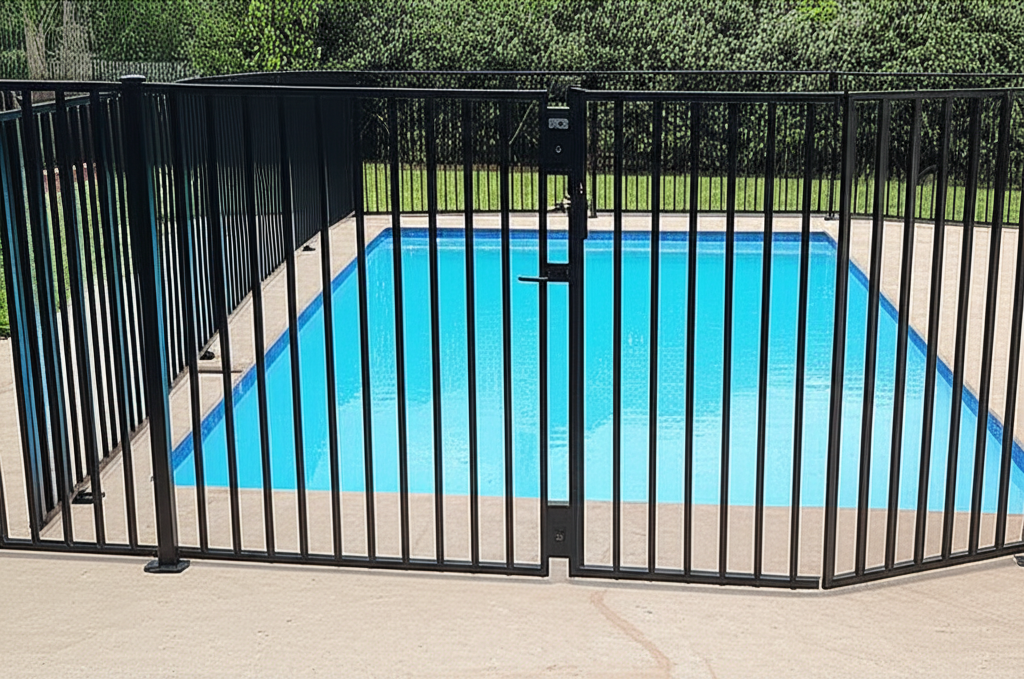
Minimum Height: Most jurisdictions require a fence to be at least 4 feet (1.2 meters) high, with many now mandating 5 feet (1.5 meters) or more. This height prevents children from easily climbing over.
Self-Closing and Self-Latching Gates: All gates providing access to the pool area must be equipped with self-closing hinges and a self-latching device. The latch should be positioned too high for a young child to reach (typically at least 54 inches from the ground). Crucially, gates should always open outwards, away from the pool, to prevent a child from pushing the gate open and falling in.
Gap Limitations: The space between the bottom of the fence and the ground should be minimal, usually no more than 1 to 2 inches, to prevent a child from crawling underneath. Gaps between vertical pickets or balusters should also be narrow, typically no more than 4 inches (10 cm), to prevent a child from squeezing through.
Non-Climbable Design: To prevent easy scaling, fences should ideally not have horizontal rails on the outside that could serve as handholds or footholds. Decorative cutouts or protrusions that could aid climbing are also discouraged. For mesh fences, the material should be taut and difficult to climb.
Isolation: The most effective safety barrier completely surrounds and isolates the pool from the home and from the rest of the yard. This means the house wall should not form part of the barrier unless all doors and windows leading directly to the pool area are alarmed and meet specific safety standards.
Types of Pool Fences and Compliance Considerations
Various materials can be used for pool fences, each with its own aesthetic and structural considerations, but all must meet the local Pool Fence Laws for structural integrity and safety features:
Mesh Fences: Often removable, these offer excellent visibility and can be highly effective when properly installed and maintained taut. They typically come with self-closing and self-latching gates.
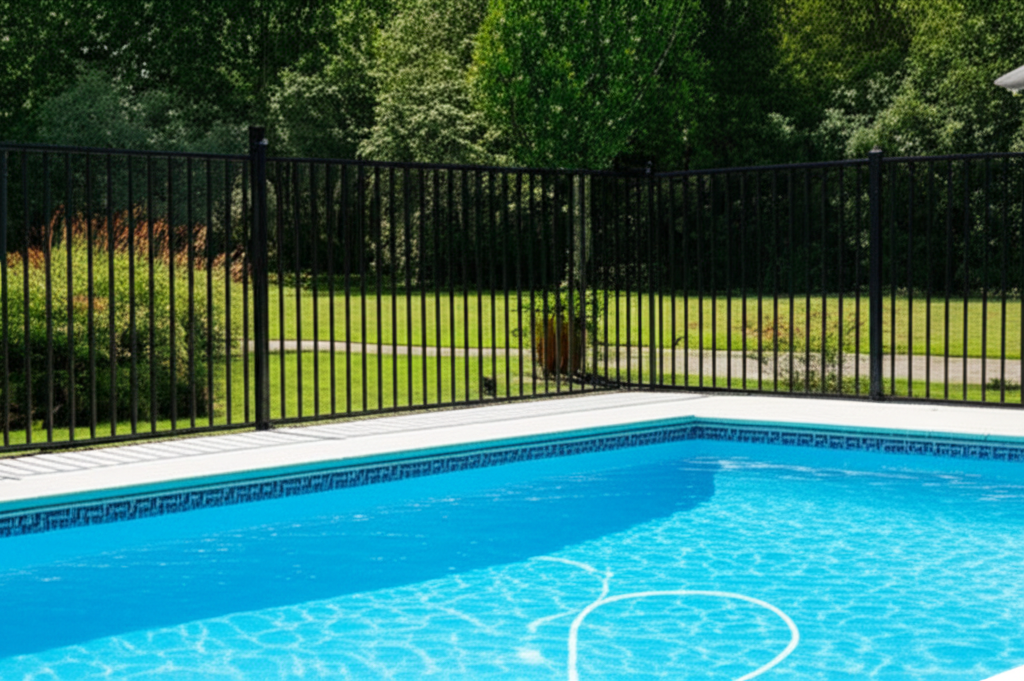
Aluminum Fences: Durable and low-maintenance, aluminum fences are popular. Their open design requires careful attention to picket spacing and the absence of climbable rails.
Wood Fences: While offering privacy, solid wood fences can obstruct visibility into the pool area. They must be regularly maintained to prevent deterioration and warping that could create gaps.
Glass Fences: These provide an unobstructed view and modern aesthetic but must be made of tempered glass that meets specific thickness requirements and secured with robust fittings.
Vinyl Fences: Similar to wood in terms of privacy potential, vinyl fences are low-maintenance and resistant to weathering but also require attention to visibility and potential climbable elements.
Regardless of the material, the critical element is ensuring the fence provides an impassable barrier for unauthorized access and is maintained in good repair.
A Multi-Layered Approach to Pool Safety
While a compliant safety barrier is foundational, pool safety relies on a multi-layered approach. No single device or method can guarantee absolute safety.
1. Constant Adult Supervision: This remains the most critical ingredient in preventing drownings. Never leave children unsupervised, even for a moment, around a pool. Designate a “Water Watcher” whose sole responsibility is to monitor children in and around the water.
2. Alarms: Gate alarms on all access points to the pool, and even alarms on doors and windows leading to the pool, can provide an early warning. Pool alarms, which detect disturbances on the water’s surface, can also add an extra layer of protection, though they should not replace a fence.
3. Swimming Lessons: Enrolling children in age-appropriate swimming lessons can teach them vital survival skills in the water, but it’s crucial to remember that lessons do not make a child “drown-proof.”
4. CPR Knowledge: All pool owners and regular caregivers should be trained in CPR (cardiopulmonary resuscitation) to respond effectively in an emergency.
Consequences of Non-Compliance
Failing to adhere to pool fence laws carries significant consequences. Legally, homeowners can face hefty fines, mandatory mitigation orders, and even criminal charges in the event of an accident. Insurance policies may also be voided if a pool does not meet safety code, leaving the owner exposed to immense liability. Beyond the legal and financial ramifications, the most devastating consequence is the potential for a child to drown or suffer brain damage from a near-drowning incident—a tragedy that is entirely preventable.
Conclusion
Pool fence laws are far more than bureaucratic red tape; they are life-saving regulations born from the painful lessons of past tragedies. A well-designed, properly installed, and meticulously maintained safety barrier is an essential guardian that significantly reduces the risk of accidental drowning. By understanding and embracing these regulations, pool owners contribute to a safer environment for children and ensure that their pool remains a source of joy, not anguish. Prioritizing pool safety through strict adherence to these laws is an investment in peace of mind and, most importantly, in saving lives.