- The Urgency of Poolside Emergencies
- Understanding CPR: Lifesaving Basics
- Recognizing a Crisis and Acting Swiftly
- The Role of an AED in Poolside First Aid
- Training is Paramount
- Prevention as the Ultimate First Aid
CPR, or Cardiopulmonary Resuscitation, is not just a medical procedure taught in clinics; it’s an indispensable skill that every individual, especially those frequenting aquatic environments, should possess. When it comes to poolside safety, the rapid response time required in an emergency means that immediate first aid is truly the difference between life and death. Drowning can happen swiftly and silently, making it critical for anyone supervising or enjoying time at a pool to be equipped with the knowledge and confidence to act decisively. Being prepared with essential poolside first aid, centered around CPR, fundamentally transforms a dangerous situation into one with a chance of recovery.
The Urgency of Poolside Emergencies
Aquatic environments, while offering refreshing respite and enjoyable recreation, also present unique hazards. Drowning is a leading cause of accidental death, particularly among children. Unlike the dramatic struggles often depicted in media, a person drowning may appear calm, quietly slipping beneath the surface because their primary focus is simply trying to breathe. This silent danger highlights why constant, vigilant supervision is paramount. However, even with the best supervision, accidents can occur. In such critical moments, the brain can only survive for a few minutes without oxygen before irreversible damage begins. This extremely narrow window underscores why immediate intervention with effective CPR at the poolside is not just beneficial, but absolutely vital.
Understanding CPR: Lifesaving Basics
At its core, CPR is an emergency, life-saving procedure performed when the heart stops beating. Immediate CPR can double or triple a person’s chance of survival after cardiac arrest. For drowning incidents, the issue is often a lack of oxygen, leading to respiratory arrest which then causes cardiac arrest. Therefore, rescue breaths are a crucial component alongside chest compressions, particularly in these scenarios. The procedure involves a combination of chest compressions, which manually pump blood to the brain and other vital organs, and rescue breaths, which deliver oxygen into the lungs. Knowing the correct technique, depth, and rate for compressions and breaths is fundamental to its effectiveness. While “Hands-Only CPR” is often taught for sudden cardiac arrest, conventional CPR (with breaths) is usually recommended for drowning victims and children.
Recognizing a Crisis and Acting Swiftly
The first step in any poolside emergency is recognizing that a crisis is occurring. Look for signs such as a person submerged, struggling weakly at the surface, or unresponsive. Once a potential emergency is identified, follow these critical steps:
1. Ensure Safety First: Before approaching the victim, make sure the area is safe for you. Never endanger yourself.
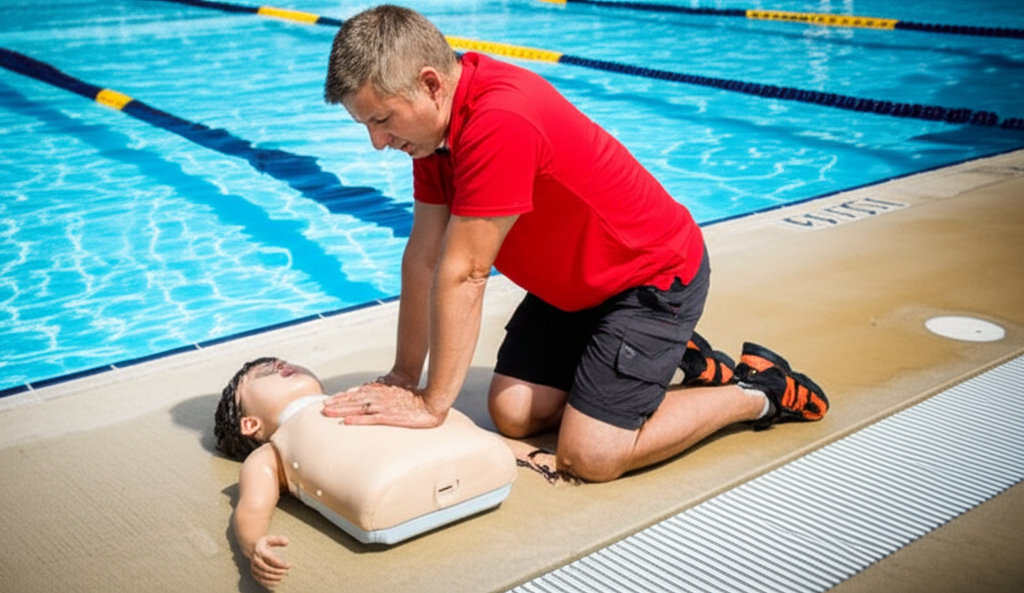
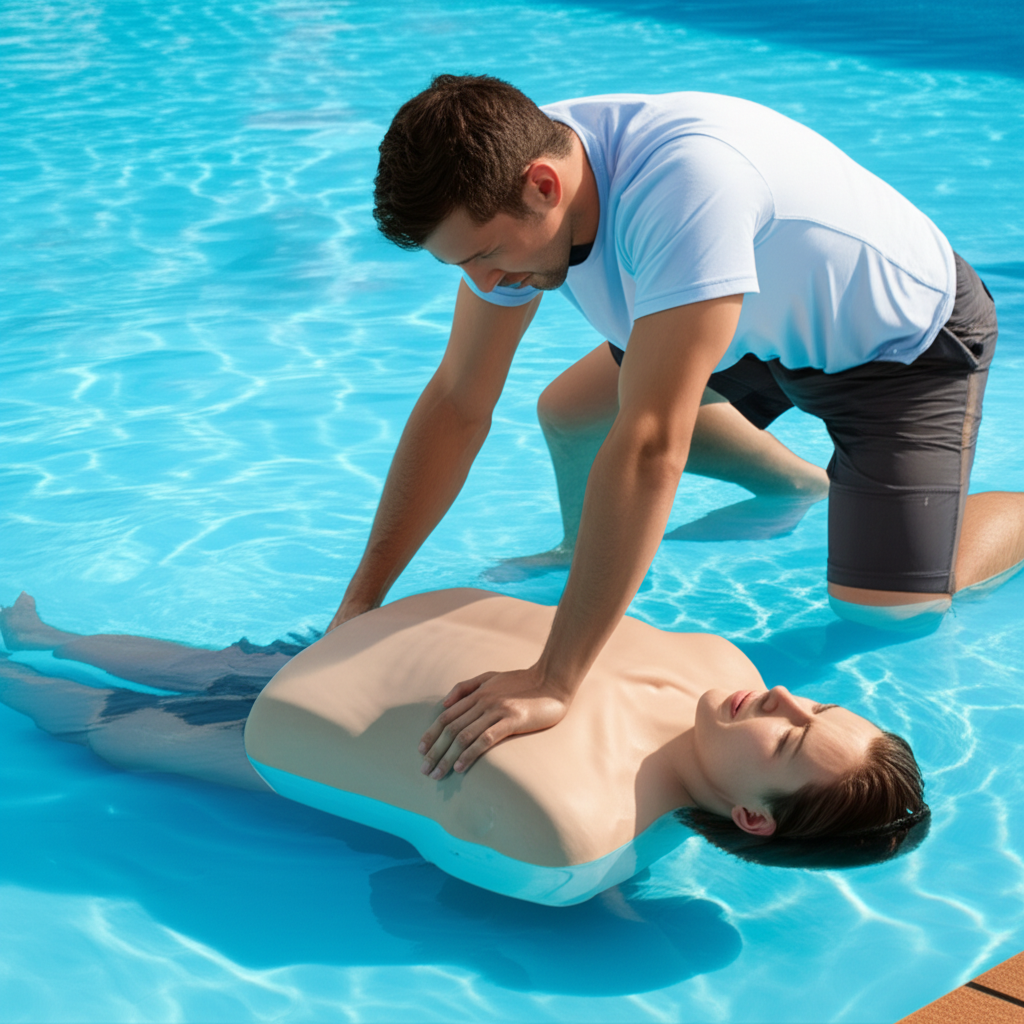
2. Remove from Water: Carefully remove the person from the water as quickly as possible. This must be done safely to allow for effective CPR on a firm, flat surface.
3. Assess Responsiveness and Breathing: Gently tap and shout, “Are you okay?” While doing so, quickly scan for breathing. Look for normal chest rise and fall. Agonal gasps (gasping or snorting sounds) do not count as normal breathing. If they are unresponsive and not breathing normally, or only gasping, assume a cardiac or respiratory arrest.
4. Call for Help: Immediately direct someone to call 911 (or your local emergency number) and retrieve an Automated External Defibrillator (AED) if one is available. If you are alone, call 911 after initiating CPR for two minutes, especially if it’s a child.
5. Begin CPR Immediately:
Open the Airway: Tilt the head back slightly and lift the chin to open the airway.
Give Rescue Breaths (if trained): Pinch the nose shut and cover the victim’s mouth with yours, forming an airtight seal. Give two breaths, each lasting about one second, watching for chest rise. If the chest doesn’t rise, re-tilt the head and try again.
Perform Chest Compressions: Place the heel of one hand in the center of the chest, then place the heel of your other hand on top. Interlace your fingers. Compress hard and fast, at a rate of 100 to 120 compressions per minute, to a depth of at least two inches for adults and about two inches for children. After 30 compressions, give two rescue breaths.
Continue until: Emergency Medical Services (EMS) arrive, an AED becomes available, or the person shows obvious signs of life.
The Role of an AED in Poolside First Aid
While CPR manually circulates blood, an Automated External Defibrillator (AED) is designed to correct certain life-threatening heart rhythms. If an AED becomes available, apply the pads to the victim’s bare chest and follow the device’s voice prompts. An AED can significantly increase survival rates, especially when used in conjunction with high-quality CPR. Many public pools, community centers, and even private residences with pools are now equipped with AEDs. Knowing where it is and how to use it can be a game-changer.
Training is Paramount
The psychological impact of facing a medical emergency can be overwhelming. Formal CPR and first aid training provides not only the critical skills but also the confidence to act effectively under pressure. Organizations like the American Heart Association (AHA) and the American Red Cross offer comprehensive courses that cover adult, child, and infant CPR, as well as basic first aid. These courses provide hands-on practice, allowing individuals to become proficient in techniques like chest compressions, rescue breathing, and even the use of an AED. Regular refreshers are highly recommended to keep skills sharp and up-to-date with the latest guidelines.
Prevention as the Ultimate First Aid
While CPR is an essential last resort, the ultimate goal should always be prevention. Implementing robust pool safety measures can drastically reduce the risk of drowning. This includes:
Constant Supervision: Never leave children unattended near water. Designate a “Water Watcher” who isn’t distracted.
Fencing and Barriers: Install appropriate fencing with self-closing, self-latching gates around pools.
Swim Lessons: Enroll children in age-appropriate swim lessons when they are ready.
Life Jackets: Insist on U.S. Coast Guard-approved life jackets for non-swimmers or weak swimmers.
Avoid Alcohol: Never consume alcohol or drugs while supervising swimmers.
Clear Pool Deck: Keep pool decks clear of toys and tripping hazards.
In conclusion, the presence of water inherently elevates the stakes of any medical emergency. Equipping yourself and your loved ones with the knowledge and skills of CPR is not merely a good idea; it is a fundamental responsibility for anyone enjoying or managing a poolside environment. Through proper training and vigilance, we can transform potentially tragic incidents into stories of swift, life-saving intervention. Be prepared, be proactive, and be a lifesaver.