- Why Quality Filtration is Non-Negotiable for Best Pool Water
- Decoding the Main Pool Filter Types
- The Versatility of a Sand Filter
- The Efficiency of a Cartridge Filter
- The Pinnacle of Clarity: The DE Filter
- Selecting the Right Pool Filter for Your Needs
- Maximizing the Life and Performance of Your Pool Filters
Pool Filters are the unsung heroes of crystal-clear water, working tirelessly behind the scenes to keep your swimming sanctuary inviting and safe. Without an effective filtration system, your pool would quickly become a cloudy, unhygienic mess, teeming with debris, algae, and microscopic contaminants. Understanding the different types of filters available and how they operate is crucial for any pool owner aiming for optimal water quality. This comprehensive guide will break down the essential details of the most common pool filter technologies, helping you make informed decisions for the best pool water possible.
Why Quality Filtration is Non-Negotiable for Best Pool Water
Beyond just aesthetics, proper pool filtration is fundamental for several reasons:
Health and Safety: Filters remove pathogens, bacteria, and other microorganisms that can cause recreational water illnesses. They also trap skin cells, body oils, and lotions, preventing them from feeding less desirable organisms.
Water Clarity: By continuously removing dirt, leaves, insects, and microscopic particles, filters maintain the sparkling clarity that makes swimming enjoyable.
Chemical Efficiency: Cleaner water means your sanitizers (like chlorine) can work more effectively on what truly matters, reducing the overall chemical demand and saving you money.
Equipment Longevity: Keeping debris out of the water protects other vital pool components, such as pumps and heaters, from damage and wear.
Decoding the Main Pool Filter Types
There are three primary types of pool filters, each employing a distinct method to purify your water: sand, cartridge, and diatomaceous earth (DE). Each has its own set of advantages, disadvantages, and maintenance requirements.
The Versatility of a Sand Filter
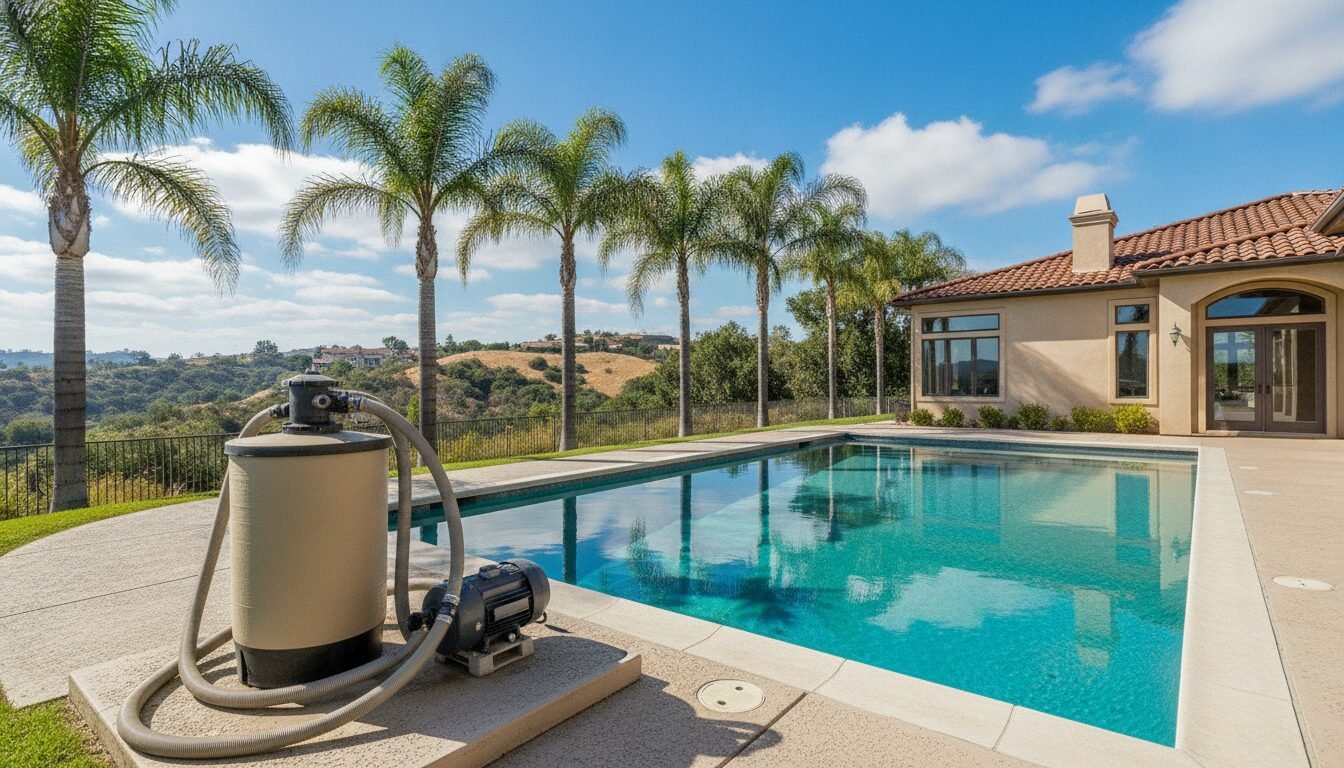
The Sand Filter is perhaps the most widely recognized and oldest form of pool filtration. It operates on a surprisingly simple yet effective principle: water is pumped through a large tank filled with specialized filter sand. As water passes through the sand bed, minute particles of dirt, debris, and impurities are trapped between the grains of sand. The clean water then returns to the pool.
How it Works: Pool water enters the top of the tank and is distributed evenly over the sand. Gravity pulls the water down through the sand bed, leaving contaminants behind. A lateral system at the bottom collects the filtered water and sends it back to the pool.
Pros:
Low Initial Cost: Generally the least expensive filter to purchase.
Easy Maintenance: Routine maintenance primarily involves backwashing – reversing the water flow to flush trapped debris out of the filter and into a waste line.
Durability: Sand lasts a long time, typically 5-7 years before needing replacement.
Cons:
Lower Filtration Quality: Sand filters typically filter down to 20-40 microns, meaning they might not catch the finest particles compared to other types.
Water Waste: Backwashing uses a significant amount of water, which can be a concern in drought-prone areas.
Best For: Budget-conscious pool owners, those who prioritize ease of use, and larger residential or commercial pools where robust filtration is needed without extreme fine particle removal.
The Efficiency of a Cartridge Filter
Cartridge Filter systems are increasingly popular due to their excellent filtration capabilities and user-friendly maintenance. Instead of sand, these filters use large, pleated fabric cartridges (similar to an air filter) to trap impurities.
How it Works: Water flows into the filter tank, through the pleated fabric of the cartridge(s), which traps dirt and debris as fine as 10-25 microns. The clean water then exits the filter and returns to the pool.
Pros:
Superior Filtration: Catches finer particles than sand filters, resulting in clearer water.
Water Conservation: No backwashing required, meaning no water is wasted. Cartridges are cleaned by simply rinsing them with a garden hose.
Energy Efficient: Typically operates at lower pressure, which can reduce energy consumption for the pump.
Cons:
Higher Initial Cost: More expensive than sand filters upfront.
Manual Cleaning: Cartridges require manual removal and cleaning, which can be a messy task.
Cartridge Replacement: Cartridges need replacement every 1-5 years, depending on usage and maintenance, representing an ongoing cost.
Best For: Environmentally conscious pool owners, those seeking superior water clarity without the hassle of backwashing, and smaller to medium-sized residential pools.
The Pinnacle of Clarity: The DE Filter
The DE Filter (Diatomaceous Earth) is considered the gold standard for pool water clarity, capable of filtering out the finest particles. Diatomaceous earth is a powdery substance made from the fossilized remains of diatoms, microscopic aquatic organisms.
How it Works: DE powder is added to the pool skimmer, where it coats a series of internal fabric grids within the filter tank. As water passes through this DE-coated fabric, the microscopic pores of the DE trap particles as small as 2-5 microns.
Pros:
Unmatched Filtration Quality: Far surpasses sand and cartridge filters in its ability to remove the finest particles, delivering exceptionally clear, polished water.
Efficient Cleaning: Periodically backwashed, like sand filters, to remove accumulated DE and debris, or manually disassembled for cleaning.
Cons:
Highest Initial Cost: Most expensive filter type to purchase.
More Complex Maintenance: Requires recharging with new DE powder after backwashing. Filters also need periodic “deep cleaning” where grids are manually removed and hosed off.
DE Disposal: Used DE must be disposed of properly, as it cannot be backwashed into all septic or sewer systems.
Potential Health Concern: DE powder can be a respiratory irritant if inhaled; caution is needed during handling.
Best For: Pool owners who demand the absolute clearest water, prioritize premium filtration performance, and are willing to invest in slightly more involved maintenance.
Selecting the Right Pool Filter for Your Needs
Choosing among these pool filters boils down to balancing budget, desired water clarity, and maintenance preferences.
If cost and low-fuss maintenance are your top priorities, a sand filter is a solid choice.
For excellent clarity and water conservation, while still offering relatively easy maintenance, a cartridge filter stands out.
If you seek the pinnacle of pristine water and don’t mind a bit more hands-on maintenance, a DE filter will deliver unparalleled results.
Regardless of the type you choose, proper sizing of your filter to your pool’s volume and pump flow rate is critically important for optimal performance. Always consult with a pool professional or refer to manufacturer guidelines to ensure your filter is adequately matched to your pool system.
Maximizing the Life and Performance of Your Pool Filters
Once you’ve installed your chosen filtration system, ongoing care is key. Regular backwashing (for sand and DE filters), cartridge cleaning/replacement, and occasional system inspections will ensure your filter operates at peak efficiency. Keeping an eye on your pressure gauge, which indicates when your filter needs attention, is a habit every pool owner should adopt. A clean, well-maintained filter is the cornerstone of a healthy, sparkling pool.
By understanding the distinct advantages and intricacies of sand, cartridge, and DE filters, you’re empowered to make the best choice for your pool, guaranteeing consistently clean, inviting water for years of enjoyment.