- The Indispensable Role of Pool Filters
- Understanding Different Pool Filters
- The Sand Filter: Durable and Dependable
- The Cartridge Filter: Efficient and Water-Saving
- The DE Filter: Unparalleled Clarity
- Choosing Your Ideal Pool Filter
Pool filters are the unsung heroes of any pristine swimming environment, silently working to remove impurities and keep your water crystal clear and inviting. Without a diligent filtration system, your pool would quickly become a cloudy, unappealing breeding ground for algae and bacteria. Understanding the different types available and how they function is key to making informed decisions about your pool’s health and your enjoyment. This guide will walk you through the three primary filtration systems, helping you grasp their mechanisms, benefits, and maintenance requirements.
The Indispensable Role of Pool Filters
At its core, a pool filter is designed to remove debris, dirt, and microscopic particles from your pool water. Every time your pool pump runs, it draws water from the skimmers and main drain, pushes it through the filter, and then returns the cleaned water to the pool via the return jets. This continuous cycle ensures that contaminants – from leaves and insects to suntan lotion residues and microscopic organisms – are trapped, preventing them from accumulating and impacting water quality. Effective filtration isn’t just about aesthetics; it’s crucial for sanitation, reducing the burden on your chemical treatments, and safeguarding swimmer health.
Understanding Different Pool Filters
While the ultimate goal is the same, the method of achieving clean water varies significantly between the main types of filters. Each offers unique advantages and considerations when it comes to performance, cost, and maintenance.
The Sand Filter: Durable and Dependable
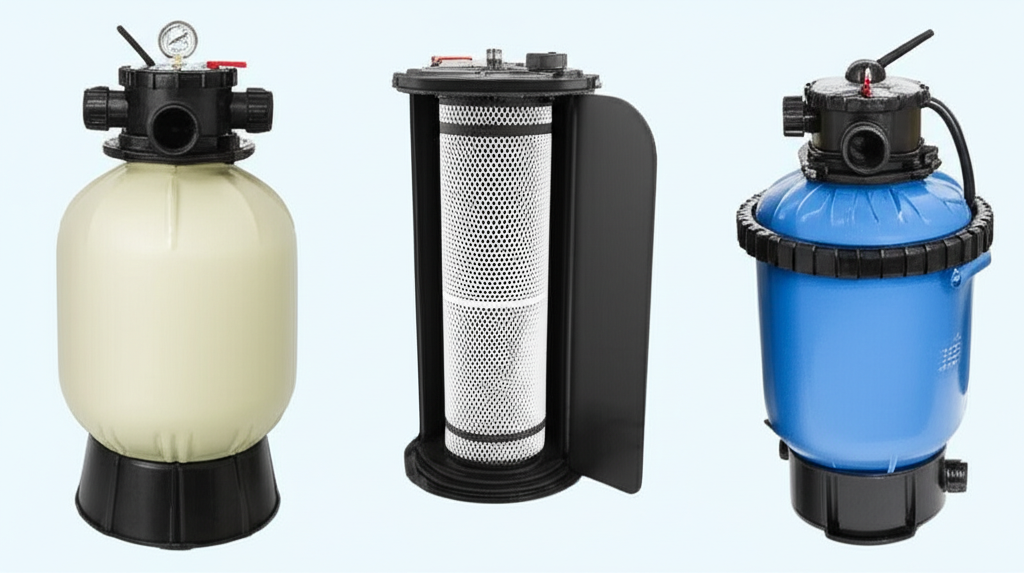
The Sand Filter is perhaps the most common and oldest form of pool filtration, renowned for its simplicity and robustness. It operates using a large tank filled with specialized filter sand. As pool water is pumped into the top of the tank, it flows down through the sand bed. The sharp edges of the sand particles trap debris and impurities, allowing only clean water to pass through the bottom of the tank and return to the pool. Over time, the sand bed collects more and more particles, making it more effective initially but eventually restricting water flow and reducing its cleaning efficiency.
Pros: Highly durable, low initial cost, easy to operate. Maintenance typically involves “backwashing,” a simple process of reversing water flow to flush trapped debris out of the filter and into a waste line. Sand generally lasts 5-7 years before needing replacement.
Cons: Filters down to about 20-40 microns, which is good but not as fine as other types. Backwashing consumes a significant amount of water.
Maintenance: Backwash regularly (usually when pressure gauge rises 8-10 psi above clean reading) until the waste water runs clear.
The Cartridge Filter: Efficient and Water-Saving
The Cartridge Filter utilizes cylindrical cartridges made of pleated polyester fabric. Water flows into the filter tank, passes through the fabric material, and returns to the pool. The pleats provide a large surface area for trapping particles, ensuring efficient filtration. This type of filter has become increasingly popular due to its excellent filtration capabilities and reduced water waste.
Pros: Filters down to a finer level (10-20 microns) than sand filters, resulting in clearer water. No backwashing required, saving water. Easy to remove and clean cartridges.
Cons: Requires manual cleaning of cartridges, which can be a bit messy. Cartridges need to be replaced periodically (typically every 1-3 years depending on usage and cleaning). Higher initial cost than sand filters for some models.
Maintenance: Remove cartridges and rinse them thoroughly with a garden hose. For deeper cleaning, cartridges can be soaked in a specialized filter cleaner solution to remove oils and stubborn debris.
The DE Filter: Unparalleled Clarity
The DE Filter, or Diatomaceous Earth Filter, offers the finest level of filtration available for residential pools, often producing water with an almost polished, sparkling quality. Diatomaceous earth is a fine, powdery substance made from fossilized diatoms, which are microscopic aquatic organisms. Inside the DE filter tank, grids or fingers are coated with a layer of this powder. As water passes through the DE-coated grids, the incredibly small pores in the DE trap particles as tiny as 2-5 microns.
Pros: Provides the clearest water possible due to superior filtration. Highly effective at removing even microscopic contaminants.
Cons: Most expensive option initially. Maintenance is more involved; it requires backwashing to remove dirty DE, followed by “recharging” the filter with new DE powder. The powder itself can be a respiratory irritant and needs cautious handling. Grid assemblies may also need periodic disassembly and cleaning.
Maintenance: Backwash when pressure rises, then add new DE powder through the skimmer. Grids should be inspected and cleaned manually at least once a year, or more often if pressure problems persist.
Choosing Your Ideal Pool Filter
Selecting the right filter for your pool depends on several factors:
Desired Water Clarity: If crystal-clear, sparkling water is your top priority, a DE filter is unmatched. For very good clarity, a cartridge filter is an excellent choice. A sand filter offers good clarity suitable for most recreational swimming.
Maintenance Preference: If you prefer minimal, hands-off maintenance, a sand filter’s backwashing simplicity might appeal to you. If you don’t mind periodic manual cleaning and want water conservation, a cartridge filter is great. If you prioritize the absolute finest filtration and are comfortable with more involved maintenance, consider a DE filter.
Budget: Sand filters generally have the lowest upfront cost, followed by cartridge filters, with DE filters being the most expensive. Factor in ongoing costs like replacement cartridges or DE powder.
* Environmental Concerns: Cartridge filters are the most water-efficient, as they don’t require backwashing.
No matter which filter type you choose, remember that regular maintenance and proper operation are critical to its efficiency and longevity. Running your pump for an adequate amount of time each day, combined with balanced water chemistry, will ensure your pool filter performs optimally, keeping your swimming sanctuary clean, healthy, and endlessly inviting.