- The Unseen Workhorse: Understanding the Pool Skimmer's Core Functionality
- The Crucial Role of Your Pool Skimmer in Water Quality
- Function and Types of Pool Skimmers
- Optimizing Your Pool Skimmer for Peak Performance
- Troubleshooting Common Pool Skimmer Issues
Pool skimmer is an unsung hero in the symphony of pool maintenance, quietly working to keep your swimming haven pristine. Often overlooked but indispensable, this crucial component serves as the pool’s first line of defense against the relentless onslaught of surface debris. Without a well-functioning skimmer, your pool water would quickly become a frustrating collection of leaves, insects, pollen, and other unwanted particles, leading to cloudy water, increased chemical consumption, and potential strain on your entire filtration system. Understanding its mechanism, the various types available, and how to optimize its performance is key to achieving crystal-clear water with minimal effort.
The Unseen Workhorse: Understanding the Pool Skimmer’s Core Functionality
At its most fundamental, a pool skimmer is designed to remove debris from the water’s surface before it has a chance to sink to the bottom. It achieves this by creating a gentle, continuous current that draws water, along with floating contaminants, into its opening. This opening is typically equipped with a floating flap, known as a weir, which acts like a one-way gate, allowing debris to enter but preventing it from floating back out when the pump is off or when agitated by swimmers.
Once inside the skimmer, the water passes through a removable basket, which traps larger debris like leaves, twigs, and bugs. From there, the water continues through the skimmer’s plumbing and on to the main pump and filter system for further purification. This initial capture of surface debris significantly reduces the workload on your filter, extending its lifespan and maintaining its efficiency for trapping finer particles. Without this crucial first step, your filter would prematurely clog with large items, requiring more frequent and arduous cleaning.
The Crucial Role of Your Pool Skimmer in Water Quality
The impact of an efficient pool skimmer extends far beyond just aesthetics. Its continuous action is vital for maintaining overall water quality and health. When organic debris like leaves and insects are allowed to decompose in the pool, they release phosphates and nitrates. These are primary food sources for algae, leading to unsightly blooms, increased chlorine demand, and potential skin and eye irritation for swimmers.
By diligently removing these contaminants as soon as they hit the water, the skimmer helps to:
Prevent Algae Growth: Less organic material means less food for algae, keeping your water clearer and reducing the need for shock treatments.
Reduce Chemical Consumption: Cleaner water requires fewer sanitizers and balancing chemicals to maintain optimal levels.
Improve Filtration Efficiency: Removing large debris before it reaches the main filter allows the filter to focus on microscopic particles, leading to superior water clarity.
Protect Pool Equipment: Preventing large debris from entering the pump and filter system reduces the risk of clogs and damage to impellers, prolonging the life of your expensive equipment.
Essentially, the skimmer acts as the pool’s preliminary digestive system, intercepting and removing bulk waste before it can contaminate the entire body of water.
Function and Types of Pool Skimmers
Understanding the different function and types of skimmers available can help you optimize your cleaning strategy or even choose the right type for a new or existing pool setup.
1. Built-in/Inground Skimmers: These are the most common type for permanent inground pools. Integrated directly into the pool wall near the surface, they are connected to the main plumbing system.
Function: They draw water through the weir, into a basket, and then to the pump and filter. Their design is subtle and highly effective due to their direct connection to the powerful pool pump.
Advantages: Permanent, highly efficient, aesthetically integrated, less visible.
Disadvantages: Requires professional installation, not easily adjustable in location.
2. Automatic/Robotic Surface Skimmers: These are independent, floating devices that propel themselves across the pool surface, collecting debris in an internal basket. They can be solar-powered or battery-operated.
Function: They use small motors to move around the pool, creating their own surface current to direct debris into their collection basket.
Advantages: Excellent at continuous surface skimming, not reliant on the main pump, can cover the entire surface, ideal for pools with heavy debris.
Disadvantages: Initial cost, requires charging/battery maintenance, collection capacity can be smaller than built-in skimmers.
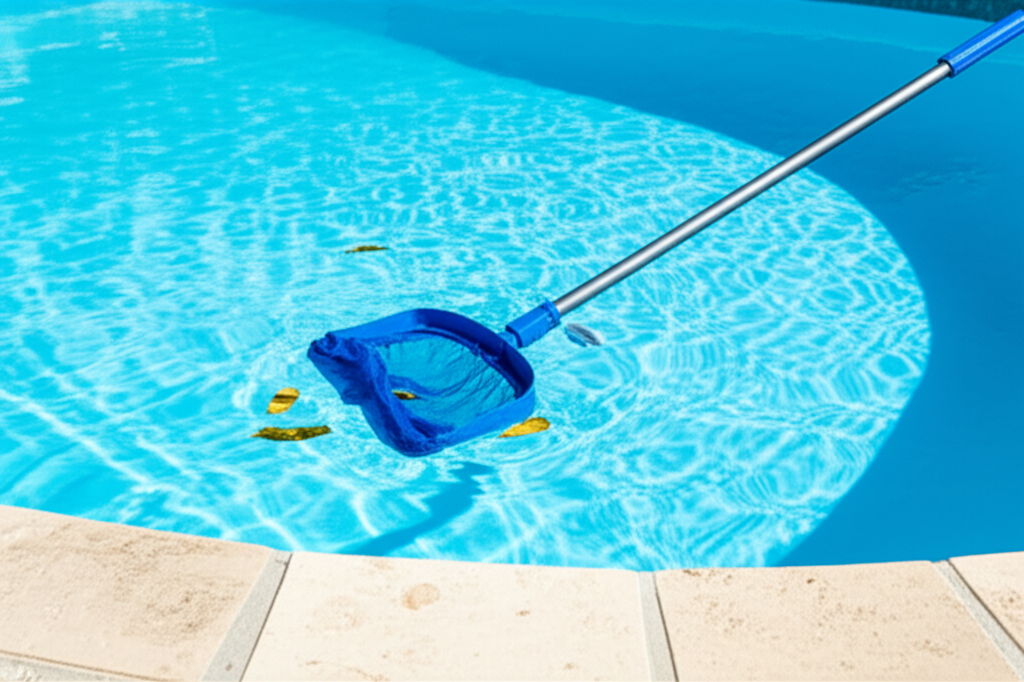
3. Manual Skimmers (Hand Skimmers/Nets): This is the classic, most basic form of skimming – a net attached to a telescopic pole.
Function: Directly used by a person to scoop debris off the water surface or from the pool floor.
Advantages: Instant removal of large items, very effective for spot cleaning, inexpensive, versatile.
Disadvantages: Labor-intensive, not automatic or continuous.
4. Attachable Skimmers (Above-Ground Pool Skimmers): Designed for above-ground pools, these attach to the pool wall and siphon water using the pool pump’s suction or return jet, mimicking the function of a built-in skimmer.
Function: They typically sit on the pool wall and connect to the existing filtration system, drawing surface water into a basket.
Advantages: Affordable way to add a surface skimmer to an above-ground pool, improves cleaning efficiency significantly.
Disadvantages: Can be less robust than built-in options, may not have a weir flap as effective as inground versions.
Optimizing Your Pool Skimmer for Peak Performance
To ensure your pool skimmer operates at its best and provides optimal cleaning, regular maintenance and attention are crucial.
1. Empty the Skimmer Basket Regularly: This is the most critical step. A full basket restricts water flow, reduces suction, and renders the skimmer ineffective. Empty it daily, or even more frequently during heavy debris seasons.
2. Maintain the Correct Water Level: For optimal skimming, the water level should be about halfway up the skimmer opening. If the water level is too high, the weir flap won’t work efficiently. Too low, and the skimmer will draw in air, which can damage your pool pump.
3. Check the Weir Flap: Ensure the weir flap swings freely. If it’s stuck or broken, it won’t create the necessary surface tension to effectively draw debris in, allowing collected items to escape.
4. Consider Skimmer Socks: These fine mesh bags fit inside your skimmer basket and act as an extra layer of filtration. They excel at trapping fine particles like pollen, pet hair, dirt, and even oil before they reach your main filter. Remember to clean or replace them frequently.
5. Inspect for Air Leaks: If your skimmer is constantly gurgling or you see a stream of bubbles coming from your return jets, it could indicate an air leak in the skimmer plumbing. This reduces suction and can negatively impact pump performance.
6. Clear Clogs: Occasionally, debris can get past the basket and clog the skimmer’s plumbing line. If suction is poor, and the basket is clear, you might need to backwash or use a plumbing snake to clear the line.
Troubleshooting Common Pool Skimmer Issues
Poor Suction: Check the skimmer basket for debris, ensure the water level is correct, and verify the weir flap is moving freely. Also, check for clogs in the skimmer line itself or ensure the pump is primed and running efficiently.
Weir Flap Stuck/Broken: Replace a broken weir flap immediately. If it’s just stuck, clean around it to remove any obstructing debris.
* Skimmer Drawing Air: Most likely due to a low water level. If the level is correct, check for leaks in the skimmer body or its plumbing connections.
A well-maintained and efficiently operating pool skimmer is the bedrock of a clean, healthy, and inviting swimming pool. By understanding its fundamental role, the different types available, and implementing consistent maintenance practices, you empower this vital component to perform its best, ensuring your pool remains a sparkling oasis for relaxation and enjoyment. Neglecting it is an open invitation for a never-ending battle against debris and deteriorating water quality. Embrace your skimmer, and your pool will thank you.